 → Speeches and works → The War Is Won, But Peace Is Not


Albert Einstein’s 1945 speech was an early and influential warning that the end of World War II and the advent of atomic weapons had not secured a just or lasting peace, but instead began an era of fear, geopolitical division, and nuclear peril, helping to shape subsequent global debates on nuclear disarmament, scientists’ ethical responsibilities, and the need for international cooperation to prevent future wars.
On December 10, 1945, the world stood at a fragile turning point: World War II had ended only months earlier, Europe and parts of Asia lay devastated, millions were displaced, and the atomic bombings of Hiroshima and Nagasaki had introduced the nuclear age, intensifying tensions that would soon evolve into the Cold War.
At the Fifth (Alfred) Nobel ('s death) Anniversary Dinner in New York—whose theme was “Winning the Peace”—the audience largely expected moral clarity and forward-looking guidance from Albert Einstein. As the world’s most renowned scientist and a Nobel laureate closely associated with the atomic age that followed World War II, he was seen as both an intellectual authority and a moral voice. Many attendees likely anticipated a hopeful reflection aligned with the evening’s theme, emphasizing reconstruction and international harmony. Instead, while addressing the chalenge of “winning the peace,” Einstein delivered a sober warning about how fragile that peace truly was and stressed the ethical responsibility of scientists and political leaders in a nuclear world.
Einstein employed clear and persuasive language, using logical arguments to appeal to both intellect and morality. He spoke with a calm, reflective tone, warning of the dangers of nuclear weapons and nationalism while urging for global cooperation. His use of straightforward, almost conversational rhetoric made his message accessible, and his emphasis on ethical responsibility connected deeply with the audience's concerns about the future of humanity.
Einstein’s speech was largely successful in conveying his message of caution and responsibility in the post-war world. He effectively raised awareness about the dangers of nuclear weapons and the urgent need for global cooperation to ensure peace. His calm, reasoned tone and focus on ethical issues resonated with the audience's desire for security and stability after the war. However, while his ideas were impactful, the full implementation of his vision for disarmament and international unity faced significant political and practical challenges in the years that followed.
By focusing on logical arguments and moral responsibility, the speaker crafted a message that was both accessible and thought-provoking. The use of a calm, reflective tone created a sense of urgency without overwhelming the listeners, while addressing complex global issues in simple, understandable terms. This approach shows that effective communication comes from balancing intellectual depth with clear, impactful delivery. This way, the speech demonstrate clarity, ethical appeal, and relevance to the audience's concerns.
Ladies and Gentlemen:
The Nobel Anniversary celebration takes on a special significance this year. Well after our deadly struggle of many years, we are at peace again; or what we are supposed to consider as peace. And it bears a still more significant significance for the physicists who, in one way or another, were connected with the construction of the use of the atomic bomb.
For these physicists find themselves in a position not unlike to that of Alfred Nobel himself. Alfred Nobel invented the most powerful explosive ever known up to his time, a means of destruction par excellence. In order to atone for this, in order to relieve his human conscience, he instituted his awards for the promotion of peace and for achievements of peace.
Today, the physicists who participated in forging the most formidable and dangerous weapon of all times are harassed by an equal feeling of responsibility, not to say guilt. We cannot desist from warning, and warning again, we cannot and should not slacken in our efforts to make the nations of the world, and especially their governments, aware of the unspeakable disaster they are certain to provoke unless they change their attitude toward each other and toward the task of shaping the future.
We helped in creating this new weapon in order to prevent the enemies of mankind from achieving it ahead of us, which, given the mentality of the Nazis, would have meant inconceivable destruction and the enslavement of the rest of the world.
We delivered this weapon into the hands of the Americans and the British people as trustees of the whole [of] mankind, as fighters for peace and liberty. But so far, we fail to see any guarantee of peace. We do not see any guarantee of the freedoms that were promised to the nations in the Atlantic Charter. The war is won, but the peace is not.
The great powers, united in fighting, are now divided over the peace settlements.
The world was promised freedom from fear, but in fact fear has increased tremendously since the termination of the war.
The world was promised freedom from want, but large parts of the world are faced with starvation while others are living in abundance.
The nations were promised liberation and justice but we have witnessed, and are witnessing even now, the sad spectacle of liberating armies firing into populations who want their independence and social equality, and supporting in those countries, by force of arms, such parties and personalities as appear to be most suited to serve vested interests.
Territorial questions and arguments of power, obsolete though they are, still prevail over the essential demands of common welfare and justice.
Allow me to be more specific about just one case, which is but a symptom of the general situation: the case of my own people, the Jewish people. As long as Nazi violence was unleashed only, or mainly, against the Jews, the rest of the world looked on passively; and even treaties and agreements were made with the patently criminal government of the Third Reich. Later, when Hitler was on the point of taking over Romania and Hungary, at the time when Maidanek and Oswiecim were in Allied hands, and the methods of the gas chambers were well known all over the world, all attempts to rescue the Romanian and Hungarian Jews came to naught because the doors of Palestine were closed to Jewish immigrants and no country could be found that would admit those forsaken people. They were left to perish like their brothers and sisters in the occupied countries.
We shall never forget the heroic efforts of the small countries, of the Scandinavian, the Dutch, the Swiss nations, and of individuals in the occupied parts of Europe who did all in their power to protect Jewish lives. We do not forget the human[e] attitude of the Soviet Union who was the only one among the big powers to open her doors to hundreds of thousands of Jews when the Nazi armies were advancing in Poland.
But after all that had happened, and was not prevented from happening -- how is it today?
While in Europe territories are being distributed without any qualms about the wishes of the people concerned, the remainders of European Jewry, one-fifth of its prewar population, are again denied access to their haven in Palestine and left to hunger and cold and persisting hostility. There is no country, even today, that would be willing or able to offer them a place where they could live in peace and security. And the fact that many of them are still kept in degrading conditions of concentration camps by the Allies gives sufficient evidence of the shamefulness and hopelessness of the situation.
These people are forbidden to enter Palestine with reference to the principle of democracy, but actually the Western powers, in upholding the ban of the White Paper, are yielding to the threats and the external pressure of five vast and underpopulated Arab States. It is sheer irony when the British Foreign Minister tells the poor lot of European Jews they should remain in Europe because their genius is needed there, and, on the other hand, advises them not to try to get at the head of the queue lest they might incur new hatred -- hatred and persecution. Well, I am afraid they cannot help it; with their six million dead they have been pushed at the head of the queue, of the queue of Nazi victims, most against their will.
The picture of our postwar world is not bright. As far as we, the physicists, are concerned we are no politicians and it has never been our wish to meddle in politics. But we know a few things that the politicians do not know. And we feel the duty to speak up and to remind those responsible that: there is no escape into easy comforts; there is no distance ahead for proceeding little by little and delaying the necessary changes into an indefinite future; there is no time left for petty bargaining.
The situation calls for a courageous effort, for a radical change in our whole attitude in the entire political concept. May the spirit that prompted Alfred Nobel to create this great institution -- the spirit of trust and confidence, of generosity and brotherhood among men, prevail in the minds of those upon whose decisions our destiny rests. Otherwise, human civilization will be doomed.

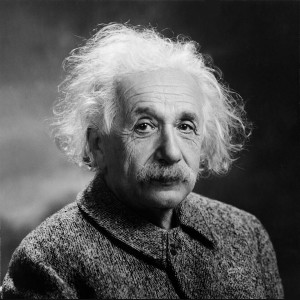 Albert Einstein

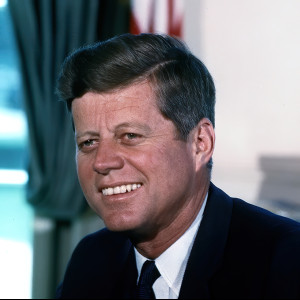 John F. Kennedy
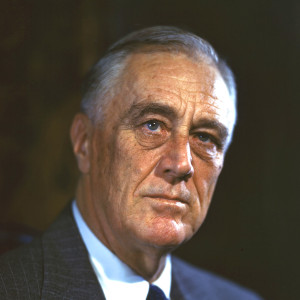 Franklin Delano Roosevelt
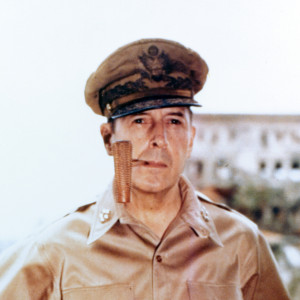 Douglas MacArthur
 Harry S. Truman
 Anwar Al-Sadat
 Bill Clinton
 Adolf Hitler
 Huey P. Long