 → Personalities → John F. Kennedy


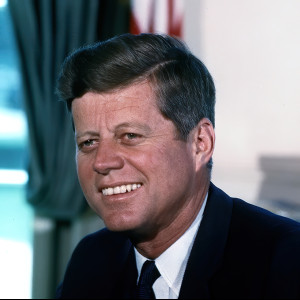
John F. Kennedy had an important leadership role during the Cuban Missile Crisis in October 1962, which brought the world to the brink of nuclear war. By negotiating a peaceful resolution with Soviet Premier Nikita Khrushchev, Kennedy not only averted a potential catastrophe but also demonstrated the importance of diplomatic engagement in resolving international conflicts. This crisis highlighted Kennedy's ability to maintain a delicate balance between military readiness and diplomatic negotiation, solidifying his legacy as a crucial figure in Cold War history.
Born into a prominent family in 1917, this influential figure rose to political prominence after serving heroically in World War II. His career began in the House of Representatives in 1947, followed by a tenure in the Senate starting in 1953. His presidency, beginning in 1961, was marked by significant events including the establishment of the Peace Corps, advocacy for civil rights, and navigating the tense Cuban Missile Crisis. His tragic assassination in 1963 left a lasting legacy, influencing subsequent American policy and international relations.
He had chronic health issues, which he often kept hidden from the public. Despite his youthful and energetic image, he suffered from Addison's disease, a disorder of the adrenal glands, and experienced severe back problems throughout his life. These ailments required him to take a daily regimen of medications and undergo multiple surgeries, yet he maintained a vigorous public persona, even engaging in athletic activities like sailing.
His decisive actions as the 35th President of the United States during the Cuban Missile Crisis in 1962, such as enforcing a naval blockade around Cuba and negotiating the removal of Soviet missiles, prevented a potential nuclear war and showcased his commitment to global peace. Additionally, he established the Peace Corps, which sent American volunteers to assist in developing countries, reflecting his dedication to humanitarian efforts and international cooperation.
On a fateful day in November 1963, while riding in a motorcade through Dallas, Texas, he was struck by two rifle bullets, leading to his untimely death. The event was witnessed by millions through television broadcasts, leaving the nation in shock and mourning. This incident brought an abrupt end to a presidency that had promised much in terms of progressive change and visionary leadership.
He was renowned for his eloquence and inspirational speeches, often characterized by their idealistic and patriotic themes.
This influential leader is best remembered for his powerful inaugural address delivered on January 20, 1961. In this speech, he famously urged Americans to consider public service, encapsulated in the enduring line, "Ask not what your country can do for you—ask what you can do for your country." This address set a tone of patriotic duty and collective responsibility that resonated deeply with the American public and is frequently cited in discussions of his rhetorical prowess.
As a writer, his most notable work is "Profiles in Courage," published in 1956. This book, which won the Pulitzer Prize for Biography, profiles eight U.S. Senators who displayed notable acts of bravery and integrity. Although it was later revealed that his aide, Theodore Sorenson, contributed significantly to the writing, the book remains a testament to his admiration for political courage and ethical leadership.
John F. Kennedy was a pivotal figure in history due to his visionary leadership during one of the most volatile periods of the Cold War. His decisive actions during the Cuban Missile Crisis averted a potential nuclear catastrophe, showcasing his commitment to global peace and stability. Furthermore, his inspiring speeches, particularly his inaugural address, galvanized a generation to engage in public service and strive for a better world. His establishment of the Peace Corps demonstrated his dedication to humanitarian efforts and international cooperation, leaving a lasting impact on global development.
Through his works, we learn that effective text writing and public speaking involve clarity, emotional resonance, and a strong call to action. Crafting messages that are succinct yet profound, as seen in his famous speeches, demonstrates the power of well-chosen words to inspire and mobilize an audience. Additionally, blending personal anecdotes with universal themes, as he did in his writing, can create a deep connection with readers and listeners. His ability to address complex issues with a tone of optimism and determination teaches us the importance of delivering messages that are both realistic and hopeful.
Studying his work offers invaluable lessons in leadership, communication, and civic responsibility. His speeches and writings demonstrate the power of eloquence and vision in mobilizing and inspiring others towards collective goals. Understanding his strategies during crises, like the Cuban Missile Crisis, provides insights into effective decision-making under pressure, while his advocacy for public service encourages a commitment to contributing positively to society.

 http://www.jfklibrary.org/