



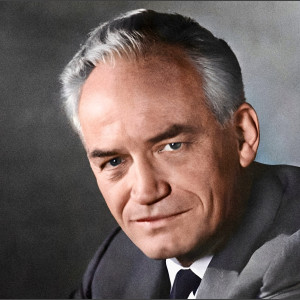
 → Personalities → Barry Goldwater


Barry Goldwater significantly influenced American conservatism by advocating for limited government, free enterprise, and a strong national defense. His 1960 book, "The Conscience of a Conservative", became a manifesto for the conservative movement, inspiring future generations of conservatives and reshaping the Republican Party's ideology. His staunch advocacy for states' rights, despite controversial positions such as opposing the Civil Rights Act of 1964, laid the groundwork for the political realignment that culminated in the Reagan Era.
Born on January 1, 1909, in Phoenix, Arizona, he was raised in an affluent family that owned a successful department store chain. After attending Staunton Military Academy and the University of Arizona, he managed the family business following his father's death. His political career began with a seat on the Phoenix City Council in 1949, leading to his election as a U.S. Senator in 1952. Known for his staunch conservative views, he ran for president in 1964 but lost in a landslide to Lyndon B. Johnson. Returning to the Senate in 1969, he served until 1987, contributing to significant military legislation before passing away on May 29, 1998, in Paradise Valley, Arizona.
During the 1964 presidential campaign, he was famously known for his candid and sometimes blunt remarks. At one rally, when offered a taste of a supporter’s homemade drink called "Gold Water", he took a sip and humorously exclaimed that it tasted "like piss", promptly spitting it out. This incident, among others, showcased his plainspoken and unfiltered style that endeared him to many supporters, even as it sometimes got him into trouble.
He was deeply affected by the assassination of President John F. Kennedy in 1963. He had been looking forward to running an issue-oriented campaign against Kennedy, whom he considered a friend and political rival. The planned campaign, which envisioned joint appearances across the country, was abruptly cut short by Kennedy's tragic death, leaving him to face Lyndon B. Johnson in the 1964 presidential election instead.
Goldwater was instrumental in shaping modern American conservatism, particularly through his advocacy for limited government and strong national defense. His 1960 book, "The Conscience of a Conservative", articulated these principles. In the Senate, he was a leading voice against the New Deal policies, opposed the 1964 Civil Rights Act on constitutional grounds, and played a key role in the passage of the Goldwater-Nichols Act, which restructured the Department of Defense to improve military efficiency and civilian control.
He was known for his candid and unfiltered speaking style, which often included blunt and humorous remarks that resonated with many supporters. As a writer, he articulated conservative principles clearly and passionately. His straightforward communication style and ability to distill complex political ideas into accessible language helped encourage the conservative movement and inspired future generations of political leaders.
One of his most significant works as a writer is the 1960 book "The Conscience of a Conservative". This book became a manifesto for the conservative movement, eloquently arguing for limited government, free markets, and a strong national defense. It inspired a generation of conservative activists and has remained in print since its publication, continuing to influence political thought and discourse.
As a speaker, his acceptance speech at the 1964 Republican National Convention stands out. In this speech, he famously declared, “Extremism in the defense of liberty is no vice. And moderation in the pursuit of justice is no virtue.” This bold statement encapsulated his unapologetic commitment to conservative principles and rallied his supporters, even as it drew significant controversy and criticism.
He played a crucial role in shaping the modern conservative movement in the United States. Through his seminal book "The Conscience of a Conservative", he laid out principles of limited government, free enterprise, and a strong national defense that resonated deeply with future conservative leaders. His unapologetic stance on these issues, exemplified by his bold rhetoric during the 1964 presidential campaign, guided a new generation of conservatives prepared for the later Reagan era. His legacy continues to influence political discourse and conservative ideology.
From his works, we can learn the power of clear, direct communication in both writing and public speaking. His ability to distill complex political ideas into accessible language made his arguments compelling and easy to understand. He demonstrated the effectiveness of passionate and unfiltered rhetoric in rallying supporters and making a strong impact, showing that authenticity and conviction can resonate deeply with audiences. Moreover, his use of bold statements and memorable phrases highlights the importance of crafting a distinctive voice and message to leave a lasting impression.
His work provides a profound understanding of how passionate, clear communication can influence political ideologies and shape public discourse. His contributions to political discourse exemplify how strong, well-articulated beliefs can shape public opinion and drive societal change.

 https://en.wikipedia.org/wiki/Barry_Goldwater
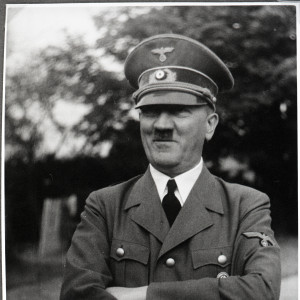 Adolf Hitler
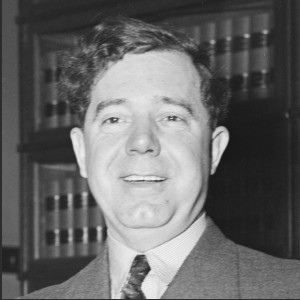 Huey P. Long
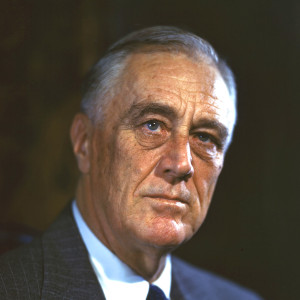 Franklin Delano Roosevelt
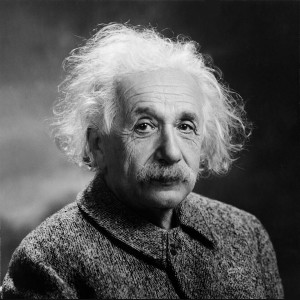 Albert Einstein
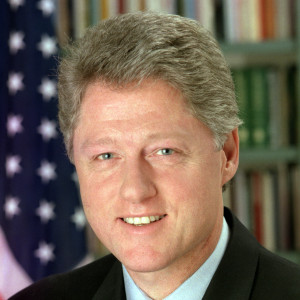 Bill Clinton