 John F. Kennedy
 → Speeches and works → Report to the American People on Civil Rights


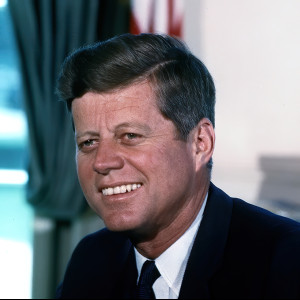
Kennedy's civil rights speech on June 11, 1963, marked a pivotal shift in U.S. history by framing racial equality as a moral issue, pushing the federal government to take stronger legislative action. This address directly led to the introduction of the Civil Rights Act of 1964, which outlawed segregation and prohibited discrimination in public places, education, and employment.
Earlier that day, Alabama Governor George Wallace had attempted to block the integration of the University of Alabama, leading President John F. Kennedy to address the nation in a televised broadcast that evening. His speech declared racial inequality a moral crisis and called for immediate legislative action to end segregation and discrimination. The address occurred at a critical juncture, as protests and civil rights demonstrations, particularly in the South, were intensifying.
The public expected President Kennedy to take a decisive stance on the escalating civil rights crisis. Many, particularly civil rights activists and African Americans, hoped for stronger federal action to combat racial segregation and discrimination, which had led to widespread protests and violence across the nation. They sought moral clarity and legislative commitment from JFK, as his previous efforts had been seen as cautious and limited. Southern segregationists, on the other hand, anticipated a defense of states' rights, fearing federal intervention in racial issues.
JFK used a range of persuasive techniques in his speech, including appeals to morality and national values, framing civil rights as fundamental to American principles like equality and justice. He used parallelism to highlight disparities faced by African Americans, making clear contrasts between the rights enjoyed by whites and those denied to black citizens. His rhetorical questions challenged the audience to empathize with the victims of discrimination, urging personal reflection. Additionally, JFK employed a calm and authoritative tone, speaking directly to the conscience of the nation.
The speech succeeded in framing civil rights as a national moral crisis, shifting public perception by emphasizing that racial injustice threatened the core values of America. He moved beyond legal arguments, appealing directly to the conscience of Americans and calling for unity. His calm yet firm delivery and the promise of legislative action helped build momentum for the eventual passage of the Civil Rights Act. However, his push for civil rights legislation also fueled opposition from Southern segregationists, highlighting the political risks he faced in advancing such a contentious issue.
With this speech, JFK demonstrated the power of clear, direct language in addressing complex issues. He used rhetorical techniques like parallelism and repetition to emphasize key points, while posing questions to engage the audience emotionally and intellectually. His focus on moral values helped make the issue personal for listeners, encouraging them to reflect on their own beliefs. The speech also shows the importance of timing and tone in public speaking, as he balanced urgency with calm authority, making his appeal both persuasive and unifying.
Good evening my fellow citizens:
This afternoon, following a series of threats and defiant statements, the presence of Alabama National Guardsmen was required on the University of Alabama to carry out the final and unequivocal order of the United States District Court of the Northern District of Alabama. That order called for the admission of two clearly qualified young Alabama residents who happened to have been born Negro.
That they were admitted peacefully on the campus is due in good measure to the conduct of the students of the University of Alabama, who met their responsibilities in a constructive way.
I hope that every American, regardless of where he lives, will stop and examine his conscience about this and other related incidents. This Nation was founded by men of many nations and backgrounds. It was founded on the principle that all men are created equal, and that the rights of every man are diminished when the rights of one man are threatened.
Today we are committed to a worldwide struggle to promote and protect the rights of all who wish to be free. And when Americans are sent to Viet-Nam or West Berlin, we do not ask for whites only. It ought to be possible, therefore, for American students of any color to attend any public institution they select without having to be backed up by troops.
It ought to be possible for American consumers of any color to receive equal service in places of public accommodation, such as hotels and restaurants and theaters and retail stores, without being forced to resort to demonstrations in the street, and it ought to be possible for American citizens of any color to register to vote in a free election without interference or fear of reprisal.
It ought to be possible, in short, for every American to enjoy the privileges of being American without regard to his race or his color. In short, every American ought to have the right to be treated as he would wish to be treated, as one would wish his children to be treated. But this is not the case.
The Negro baby born in America today, regardless of the section of the Nation in which he is born, has about one-half as much chance of completing a high school as a white baby born in the same place on the same day, one-third as much chance of completing college, one-third as much chance of becoming a professional man, twice as much chance of becoming unemployed, about one-seventh as much chance of earning $10,000 a year, a life expectancy which is 7 years shorter, and the prospects of earning only half as much.
This is not a sectional issue. Difficulties over segregation and discrimination exist in every city, in every State of the Union, producing in many cities a rising tide of discontent that threatens the public safety. Nor is this a partisan issue. In a time of domestic crisis men of good will and generosity should be able to unite regardless of party or politics. This is not even a legal or legislative issue alone. It is better to settle these matters in the courts than on the streets, and new laws are needed at every level, but law alone cannot make men see right.
We are confronted primarily with a moral issue. It is as old as the scriptures and is as clear as the American Constitution.
The heart of the question is whether all Americans are to be afforded equal rights and equal opportunities, whether we are going to treat our fellow Americans as we want to be treated. If an American, because his skin is dark, cannot eat lunch in a restaurant open to the public, if he cannot send his children to the best public school available, if he cannot vote for the public officials who will represent him, if, in short, he cannot enjoy the full and free life which all of us want, then who among us would be content to have the color of his skin changed and stand in his place? Who among us would then be content with the counsels of patience and delay?
One hundred years of delay have passed since President Lincoln freed the slaves, yet their heirs, their grandsons, are not fully free. They are not yet freed from the bonds of injustice. They are not yet freed from social and economic oppression. And this Nation, for all its hopes and all its boasts, will not be fully free until all its citizens are free.
We preach freedom around the world, and we mean it, and we cherish our freedom here at home, but are we to say to the world, and much more importantly, to each other that this is the land of the free except for the Negroes; that we have no second-class citizens except Negroes; that we have no class or caste system, no ghettoes, no master race except with respect to Negroes?
Now the time has come for this Nation to fulfill its promise. The events in Birmingham and elsewhere have so increased the cries for equality that no city or State or legislative body can prudently choose to ignore them.
The fires of frustration and discord are burning in every city, North and South, where legal remedies are not at hand. Redress is sought in the streets, in demonstrations, parades, and protests which create tensions and threaten violence and threaten lives.
We face, therefore, a moral crisis as a country and as a people. It cannot be met by repressive police action. It cannot be left to increased demonstrations in the streets. It cannot be quieted by token moves or talk. It is time to act in the Congress, in your State and local legislative body and, above all, in all of our daily lives.
It is not enough to pin the blame on others, to say this is a problem of one section of the country or another, or deplore the fact that we face. A great change is at hand, and our task, our obligation, is to make that revolution, that change, peaceful and constructive for all.
Those who do nothing are inviting shame as well as violence. Those who act boldly are recognizing right as well as reality.
Next week I shall ask the Congress of the United States to act, to make a commitment it has not fully made in this century to the proposition that race has no place in American life or law. The Federal judiciary has upheld that proposition in a series of forthright cases. The executive branch has adopted that proposition in the conduct of its affairs, including the employment of Federal personnel, the use of Federal facilities, and the sale of federally financed housing.
But there are other necessary measures which only the Congress can provide, and they must be provided at this session. The old code of equity law under which we live commands for every wrong a remedy, but in too many communities, in too many parts of the country, wrongs are inflicted on Negro citizens and there are no remedies at law. Unless the Congress acts, their only remedy is in the street.
I am, therefore, asking the Congress to enact legislation giving all Americans the right to be served in facilities which are open to the public--hotels, restaurants, theaters, retail stores, and similar establishments.
This seems to me to be an elementary right. Its denial is an arbitrary indignity that no American in 1963 should have to endure, but many do.
I have recently met with scores of business leaders urging them to take voluntary action to end this discrimination and I have been encouraged by their response, and in the last 2 weeks over 75 cities have seen progress made in desegregating these kinds of facilities. But many are unwilling to act alone, and for this reason, nationwide legislation is needed if we are to move this problem from the streets to the courts.
I am also asking the Congress to authorize the Federal Government to participate more fully in lawsuits designed to end segregation in public education. We have succeeded in persuading many districts to desegregate voluntarily. Dozens have admitted Negroes without violence. Today a Negro is attending a State-supported institution in every one of our 50 States, but the pace is very slow.
Too many Negro children entering segregated grade schools at the time of the Supreme Court's decision 9 years ago will enter segregated high schools this fall, having suffered a loss which can never be restored. The lack of an adequate education denies the Negro a chance to get a decent job.
The orderly implementation of the Supreme Court decision, therefore, cannot be left solely to those who may not have the economic resources to carry the legal action or who may be subject to harassment.
Other features will also be requested, including greater protection for the right to vote. But legislation, I repeat, cannot solve this problem alone. It must be solved in the homes of every American in every community across our country.
In this respect I want to pay tribute to those citizens North and South who have been working in their communities to make life better for all. They are acting not out of a sense of legal duty but out of a sense of human decency.
Like our soldiers and sailors in all parts of the world they are meeting freedom's challenge on the firing line, and I salute them for their honor and their courage.
My fellow Americans, this is a problem which faces us all--in every city of the North as well as the South. Today there are Negroes unemployed, two or three times as many compared to whites, inadequate in education, moving into the large cities, unable to find work, young people particularly out of work without hope, denied equal rights, denied the opportunity to eat at a restaurant or lunch counter or go to a movie theater, denied the right to a decent education, denied almost today the right to attend a State university even though qualified. It seems to me that these are matters which concern us all, not merely Presidents or Congressmen or Governors, but every citizen of the United States.
This is one country. It has become one country because all of us and all the people who came here had an equal chance to develop their talents.
We cannot say to 10 percent of the population that you can't have that right; that your children cannot have the chance to develop whatever talents they have; that the only way that they are going to get their rights is to go into the streets and demonstrate. I think we owe them and we owe ourselves a better country than that.
Therefore, I am asking for your help in making it easier for us to move ahead and to provide the kind of equality of treatment which we would want ourselves; to give a chance for every child to be educated to the limit of his talents.
As I have said before, not every child has an equal talent or an equal ability or an equal motivation, but they should have an equal right to develop their talent and their ability and their motivation, to make something of themselves.
We have a right to expect that the Negro community will be responsible, will uphold the law, but they have a right to expect that the law will be fair, that the Constitution will be color blind, as Justice Harlan said at the turn of the century.
This is what we are talking about and this is a matter which concerns this country and what it stands for, and in meeting it I ask the support of all our citizens.
Thank you very much.


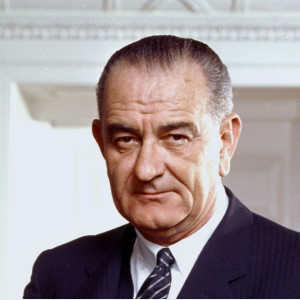 Lyndon Baines Johnson
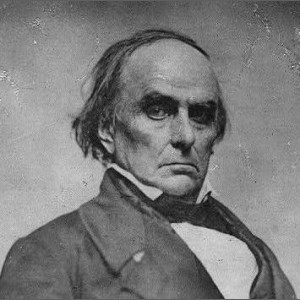 Daniel Webster
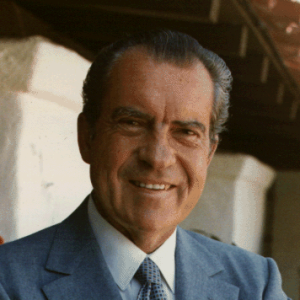 Richard M. Nixon
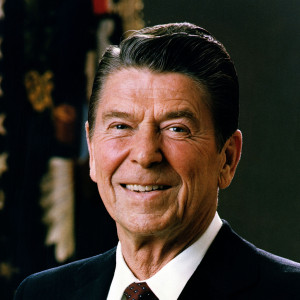 Ronald Reagan
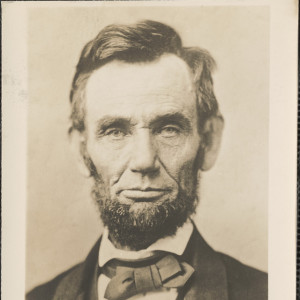 Abraham Lincoln
 Huey P. Long
 John Winthrop
 Robert Marion La Follette
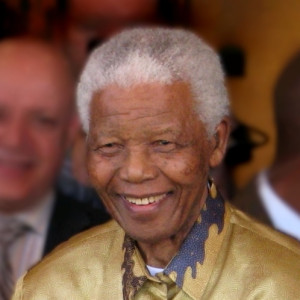 Nelson Mandela
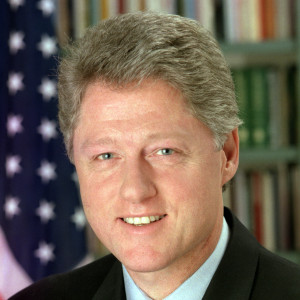 Bill Clinton
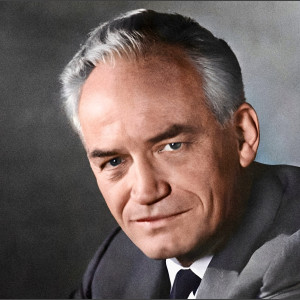 Barry Goldwater
 Edward M. Kennedy
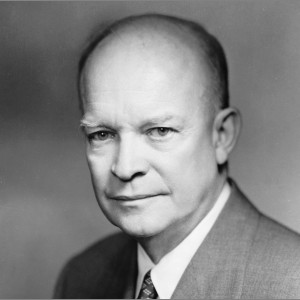 Dwight D. Eisenhower
 George W. Bush
 Franklin Delano Roosevelt