 → Personalities → Abraham Lincoln


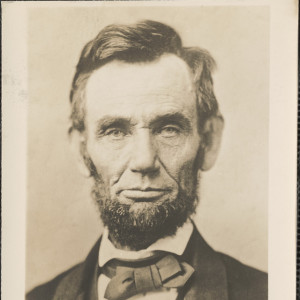
Abraham Lincoln's most significant contribution to history was his leadership during the American Civil War and his pivotal role in the abolition of slavery. As the 16th President of the United States, Lincoln preserved the Union through the nation's most challenging and divisive period and issued the Emancipation Proclamation in 1863, which declared the freedom of all slaves in Confederate-held territory. This act, coupled with his push for the passage of the 13th Amendment to the Constitution, which formally abolished slavery in the United States, marked a monumental step towards civil rights and justice, fundamentally transforming the nation's social and legal landscape.
Born into humble beginnings in a Kentucky log cabin in 1809, he rose from a self-educated youth on the American frontier to become one of the most pivotal figures in United States history. His legal career and political ascent, marked by a deep belief in the principles of liberty and equality, led him to the presidency amidst the nation's gravest crisis. During his tenure from 1861 to 1865, he navigated the country through the Civil War, preserved the Union, and issued the Emancipation Proclamation, which declared the freedom of slaves in Confederate territories. His dedication to the abolition of slavery culminated in the promotion of the 13th Amendment. His life was tragically cut short by an assassin's bullet in 1865, but his legacy as a leader committed to justice and unity endures.
One intriguing aspect of his life is his unique wrestling record. Before his presidency, he was an accomplished wrestler in his early years in Illinois. He is enshrined in the Wrestling Hall of Fame, having lost only one match out of approximately 300. This lesser-known facet of his life showcases not only his physical strength but also his competitive spirit and resilience, traits that would define his leadership during one of the nation's most tumultuous periods.
During the Civil War, his steadfast determination to preserve the Union and his strategic vision in navigating the complexities of the conflict were instrumental in maintaining the integrity of the United States. Furthermore, his issuance of the Emancipation Proclamation and advocacy for the 13th Amendment, which ultimately led to the abolition of slavery, marked a significant turning point in the nation's moral and legal landscape. These actions not only redefined the fabric of American society but also cemented his legacy as a leader committed to principles of freedom and equality.
He met an untimely end just days after the war's conclusion. While attending a play at Ford's Theatre in Washington, D.C., in April 1865, he was fatally shot by an actor and Confederate sympathizer. This event marked the first assassination of a U.S. president, sending shockwaves through a nation still healing from the ravages of war and leaving a profound void in American leadership during the critical period of Reconstruction.
The 16th President of the United States was renowned for his eloquence both as a speaker and a writer. His ability to convey complex ideas with clarity and moral force set him apart. His speeches, including the Gettysburg Address and his Second Inaugural Address, are celebrated for their profound insight and poetic quality, capturing the essence of the nation's ideals and struggles during the Civil War era. Similarly, his written correspondence and public declarations, like the Emancipation Proclamation, reflect a deep understanding of the human condition and a visionary approach to the issues of his time. These qualities not only made him an effective leader but also ensured his words would endure as a vital part of America's literary and historical heritage.
One of his most significant contributions to American literature and political oratory includes his Gettysburg Address. Delivered during the American Civil War, this speech redefined the conflict as not merely a struggle for the preservation of the Union but as a quest for human equality and freedom. In just a few short minutes, with less than 300 words, he invoked the principles of human equality espoused by the Declaration of Independence and redefined the Civil War as a struggle not only for the Union but as a new birth of freedom that would bring true equality to all of its citizens.
Another cornerstone of his literary and political legacy is the Emancipation Proclamation. Although it was a military order, it was profound in its moral and political impact. This document declared the freedom of all slaves in Confederate-held territory and was a crucial step towards the abolition of slavery throughout the United States. These works, along with his Second Inaugural Address, which sought to heal a battered nation with "malice toward none, with charity for all," underscore his mastery of language and his profound understanding of the moral imperatives that guided his presidency. His ability to articulate the deepest ideals of democracy and human rights in times of crisis and change has made these works enduring elements of his legacy.
Abraham Lincoln's importance to humanity extends beyond his role as the 16th President of the United States; it is rooted in his profound contributions to the principles of freedom, equality, and democracy. Through pivotal actions such as issuing the Emancipation Proclamation and advocating for the passage of the 13th Amendment, he not only abolished slavery but also set a global precedent for human rights and dignity. His eloquence as a speaker and writer, exemplified in the Gettysburg Address and his Second Inaugural Address, articulated the moral foundation of democracy and the inherent worth of every individual, resonating across generations and borders. Lincoln's legacy of leadership during one of America's most divisive periods, his commitment to justice, and his ability to inspire through words make him a towering figure in the quest for human equality and freedom.
Lincoln’s works teach us that effective communication is rooted in clarity, emotional resonance, and a deep understanding of the audience and context. His legacy as a speaker and writer continues to serve as a benchmark for eloquence and rhetorical skill.
Studying the works and principles of significant historical figures, such as Abraham Lincoln, enriches a person's life by offering timeless lessons in resilience, ethics, and leadership. It provides a deeper understanding of the struggles and triumphs that have shaped human society, encouraging us to reflect on our values and actions. Engaging with these teachings fosters critical thinking, empathy, and a sense of responsibility towards creating a just and equitable world. It not only connects one to the past but also illuminates paths for personal growth and civic engagement, demonstrating how individual contributions can lead to collective progress.

 https://en.wikipedia.org/wiki/Abraham_Lincoln