



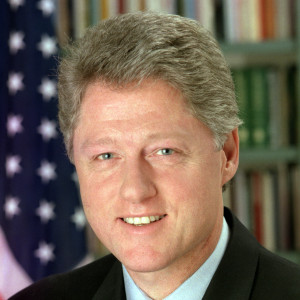
 → Personalities → Bill Clinton


Bill Clinton's presidency is most notably marked by the longest period of peacetime economic expansion in American history. During his tenure from 1993 to 2001, the United States saw significant economic growth, a reduction in unemployment, and a budget surplus by the end of his second term. His administration's efforts in domestic policy, particularly economic management, stand out as a pivotal contribution to American history. Furthermore, Clinton's work on international peace processes, such as the Dayton Accords for Bosnia and efforts in the Middle East, highlight his impact on global diplomacy. Despite controversies, his presidency is remembered for these substantial achievements in both economic policy and international relations.
He was born in a small town in Arkansas and faced the tragedy of losing his father before his birth, shaping his early life with challenges. Raised in a blended family, he showed early signs of political ambition, influenced by a significant meeting with President John F. Kennedy during his teenage years. His academic journey was marked by notable achievements, including scholarships and degrees from prestigious universities in both the United States and the UK. Before ascending to the nation's highest office, he served his home state in various capacities, showcasing a deep commitment to public service. His tenure as the leader of the nation was characterized by economic prosperity and significant legislative achievements. Despite facing personal and political challenges, he has remained active in global humanitarian efforts and politics post-presidency.
His father, a traveling salesman, met an untimely demise in an automobile accident three months before his son's birth. Despite such an early tragedy, his resilience and determination propelled him forward, leading him to significant roles in public service and shaping his understanding of loss and leadership.
He has a great musical talent, particularly his proficiency with the saxophone. He played the saxophone as part of a high school jazz trio named "Three Blind Mice," and his passion for playing the saxophone continues to this day. Clinton is a two-time Grammy Award winner, a recognition that further underscores his musical abilities and contributions outside his political career. These aspects of his life offer a lighter, more personal glimpse into the character of a man known globally for his political endeavors.
During his presidency, he was instrumental in enacting policies that led to a significant boost in the economy, resulting in the United States experiencing its longest period of peacetime economic expansion. Notable initiatives included the signing of the North American Free Trade Agreement (NAFTA), aiming to increase trade and investment between the U.S., Canada, and Mexico, and the implementation of the Violent Crime Control and Law Enforcement Act, which was designed to increase police presence and enhance crime prevention measures. Additionally, his efforts to introduce healthcare reform, though ultimately unsuccessful, underscored a commitment to improving the healthcare system. Internationally, his administration was pivotal in brokering peace in the Balkans with the Dayton Accords, aiming to end the Bosnian War. Despite the controversy that led to an impeachment trial, his leadership during a period of economic prosperity and his proactive role in international peacekeeping efforts underscore his significant contributions and complex legacy as President.
Bill Clinton is widely recognized for his exceptional skills as both a speaker and a writer, demonstrating a remarkable ability to connect with diverse audiences. His speeches often reflect a deep understanding of the issues at hand, articulated through a blend of empathy, clarity, and persuasive rhetoric. This capacity to convey complex ideas in an accessible manner has made his public addresses highly effective and memorable. As a writer, his ability to narrate and reflect on his experiences has been evident in his published works, which offer insights into his personal and political life. Clinton's articulation, whether spoken or written, showcases his comprehensive grasp of policy and human emotion, making his communication style both engaging and impactful.
One of the most significant contributions to literature by the former President includes his autobiography, "My Life," where he details his journey from a small town in Arkansas to the Oval Office. The memoir offers an in-depth look at his personal and political life, providing readers with insights into the challenges and triumphs of his presidency. His ability to narrate his story in a way that is both engaging and enlightening showcases his skill as a writer, making this work a notable addition to presidential memoirs.
As a speaker, his keynote address at the 2012 Democratic National Convention stands out as a prime example of his rhetorical prowess. In this speech, he effectively made the case for the re-election of President Barack Obama, employing his characteristic blend of detailed policy knowledge and folksy charm. His ability to break down complex issues into understandable segments, without losing the audience's interest, demonstrates his exceptional skills as an orator. This speech, among others, solidifies his reputation as one of the most persuasive and compelling political speakers of his time.
Beyond his political achievements, Clinton's exceptional skills as a speaker and writer have enabled him to connect with people on a personal level, influencing public discourse and offering insights into governance, policy, and the human experience. His works and speeches not only provide a deep understanding of his political philosophy but also inspire future generations to engage in civic life and contribute positively to society. Through these contributions, Clinton has played a vital role in shaping the modern world and advancing the cause of humanity.
Bill Clinton exemplifies how a combination of strategic pacing, inclusive language, engaging body language, and confident delivery can make both writing and speaking compelling and persuasive.
Studying the works and speeches of influential figures like Bill Clinton provides a unique lens through which to view the challenges and triumphs of their times, offering valuable lessons on leadership, resilience, and the power of effective communication. It enables individuals to critically analyze the decisions and strategies that have shaped our world, fostering a deeper understanding of historical and political dynamics. Moreover, engaging with such materials can inspire personal growth, encouraging one to reflect on their values, develop a nuanced perspective on complex issues, and cultivate the skills necessary for informed citizenship and leadership in their own lives. This approach to learning not only enriches one's knowledge but also empowers them to contribute thoughtfully to society.

 https://en.wikipedia.org/wiki/Bill_Clinton
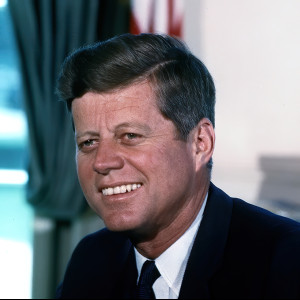 John F. Kennedy
 Lyndon Baines Johnson