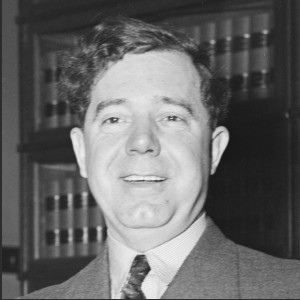
 → Personalities → Huey P. Long


In 1934 Huey P. Long proposed the "Share Our Wealth" program, which aimed to address the economic inequalities exacerbated by the Great Depression. This ambitious plan sought to cap personal fortunes, ensure a minimum income for every American family, and provide social benefits such as education and healthcare. While controversial, Long's proposals garnered widespread support and influenced several New Deal policies under President Franklin D. Roosevelt, contributing to the broader discussion on wealth redistribution and social justice in America.
Born in 1893 in Winnfield, Louisiana, he grew up in a politically vibrant environment that shaped his populist views. His early career as a traveling salesman and lawyer demonstrated his exceptional communication skills and connection with ordinary people. Entering politics in 1918, he quickly rose to prominence by fighting corporate monopolies on the Louisiana Railroad Commission. His tenure as governor from 1928 saw the implementation of extensive infrastructure projects and social reforms. Later, as a U.S. Senator, he proposed radical wealth redistribution plans, challenging the status quo during the Great Depression before his assassination in 1935.
Known for his rebellious spirit, he was expelled from high school in 1910 after distributing a flyer criticizing his teachers and the newly mandated fourth year of secondary education. Remarkably, he managed to get the principal fired but never returned to high school, instead used his charisma and debating skills to propel his early career.
He was a reformist governor and U.S. Senator who championed the cause of economic equality during the Great Depression. His "Share Our Wealth" program garnered widespread support. He also spearheaded extensive public works projects in Louisiana, including building roads, bridges, and hospitals, and provided free textbooks to students, transforming the state’s infrastructure and social services. His actions significantly influenced New Deal policies and reshaped the public's expectations of government intervention in economic matters.
In 1935, this Louisiana politician was deeply involved in state politics when he was approached by Dr. Carl Weiss, the son-in-law of a judge whose career he was jeopardizing. In the Louisiana State Capitol, Weiss shot him at close range. Despite immediate retaliation from his bodyguards, who killed Weiss on the spot, the politician succumbed to his injuries two days later, marking a sudden and violent end to his ambitious and controversial career.
He was renowned for his captivating oratory and persuasive writing. As a speaker, he had an exceptional ability to connect with and energize the common people, often using colorful language and populist rhetoric to rally support for his causes. His speeches were direct, fiery, and filled with vivid imagery, making complex issues accessible to everyday citizens. As a writer, he was equally effective, authoring works that articulated his vision for economic reform, such as his "Share Our Wealth" plan, which gained national attention. His communication skills were instrumental in his political success and his ability to mobilize mass support.
One of his most notable works as a writer was his book "Every Man a King" (1933), where he detailed his vision for economic reform and his "Share Our Wealth" program. This book laid out his plan for wealth redistribution, which proposed capping personal fortunes and providing a guaranteed income to American families, reflecting his populist ideals and deep concern for economic inequality.
As a speaker, he was famous for his electrifying and direct speeches that resonated deeply with the common people. His speech "Every Man a King," delivered in 1934, is particularly famous for its passionate call to end economic disparity and ensure prosperity for all Americans. His speeches and writings helped galvanize support for his policies and left a lasting impact on American political discourse.
Through his "Share Our Wealth" program, he sought to address the vast economic disparities exacerbated by the Great Depression by advocating for wealth redistribution and social welfare. His efforts in building extensive public infrastructure and providing free education and healthcare in Louisiana set a precedent for state-led economic and social reforms. His passionate speeches and writings inspired millions, influencing New Deal policies and reshaping the role of government in ensuring social justice and economic stability.
From Huey P. Long, we can learn that effective public speaking and writing involve not just the content, but also the delivery. Emotional engagement, simplicity in language, and a clear, relatable message are key elements that can transform a speech or text into a powerful tool for mobilization and change.
Studying the works of this prominent Louisiana politician offers valuable lessons in leadership, economic justice, and the power of advocacy. His innovative policies and reforms demonstrate how bold ideas can address societal inequalities and inspire positive change, encouraging us to think critically about social justice and the role of government in improving lives.

 https://en.wikipedia.org/wiki/Huey_Long