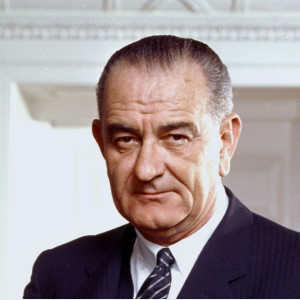
 → Personalities → Lyndon Baines Johnson


Lyndon Baines Johnson's most significant contribution to history was his advancement of civil rights and social welfare through his "Great Society" programs. As President, Johnson championed landmark legislation such as the Civil Rights Act and the Voting Rights Act, which aimed to end racial segregation and protect voting rights for minorities. Additionally, he introduced health care policies for the elderly and the poor, and launched a comprehensive War on Poverty that included various social programs to improve education and employment opportunities.
Born on August 27, 1908, in Stonewall, Texas, the future president experienced rural poverty firsthand, which influenced his empathetic approach to policy-making. He began his political journey in 1937 as a member of the U.S. House of Representatives, where he earned a reputation for his dedication and skill. His career progressed as he was elected to the Senate in 1948, eventually becoming the Senate Majority Leader in 1955. After serving as Vice President, he assumed the presidency following John F. Kennedy's assassination in 1963, when he launched an ambitious legislative agenda. His tenure was also marked by a contentious escalation of the Vietnam War, which significantly impacted his popularity and legacy.
He was known for holding important discussions and making phone calls from his bathroom. This habit was part of his larger-than-life persona and his desire to keep things moving, emphasizing efficiency over formality. This quirk was emblematic of his unorthodox yet effective leadership style, which often blended informality with direct action.
The escalation of the Vietnam War deeply affected Johnson's legacy and personal life. Despite his ambitious domestic agenda, the conflict's mounting casualties and widespread public opposition led to profound dissatisfaction and unrest across the nation. This period saw him struggle with increasing anti-war protests and political pressure, ultimately compelling him to announce that he would not seek re-election in 1968. The heavy burden of the war and its impact on his presidency remained a source of significant anguish during his final years.
Johnson had a transformative influence on American civil liberties and social programs. He enacted the groundbreaking Civil Rights Act of 1964, which decisively ended segregation in public facilities and prohibited employment discrimination based on race, color, religion, sex, or national origin. Furthermore, his tenure saw the introduction of the Voting Rights Act of 1965, which effectively dismantled legal barriers preventing African Americans from voting. On the social welfare front, he launched the Great Society initiatives, which included the establishment of Medicare and Medicaid, providing critical health insurance to the elderly and impoverished, thus reshaping the nation's social safety net.
Renowned for his compelling oratory skills and persuasive writing, the President possessed an uncanny ability to connect with diverse audiences. His speeches often combined a folksy, conversational tone with powerful rhetoric, making complex issues accessible and engaging. He was known for his meticulous preparation and use of vivid anecdotes and personal stories to illustrate his points, which resonated deeply with listeners. On top of that, his writing was marked by clarity and directness, effectively communicating his legislative goals and vision for the nation.
Among Johnson's most influential speeches, the "We Shall Overcome" address delivered to Congress on March 15, 1965, stands out. Advocating for the Voting Rights Act, he passionately highlighted the moral imperative of ensuring every American's right to vote, using compelling rhetoric to call for immediate legislative action.
Besides, his "To Fulfill These Rights" speech at Howard University's commencement in 1965 underscored the necessity of addressing deep-rooted societal inequities. He emphasized the need for comprehensive efforts to combat poverty and racial discrimination, acknowledging the enduring impacts of historical injustices. These speeches reflect his dedication to civil rights and his ability to inspire legislative and societal change through powerful oratory.
Lyndon Johnson was instrumental in advancing civil rights and social welfare in the United States. His administration achieved policies that were crucial in ending racial segregation and securing voting rights for African Americans. His "Great Society" programs greatly expanded health care access for the elderly and low-income populations. Through influential speeches Johnson championed equality and justice, inspiring lasting legislative and societal changes.
From his works, we learn the importance of directness, repetition for emphasis, and the strategic use of pauses to drive key points home. His speeches often featured clear, concise language that made his messages easily understandable. He also used repetition to reinforce crucial ideas, ensuring they resonated with his audience. Furthermore, his well-timed pauses allowed his words to sink in, giving listeners a moment to reflect on the significance of what was said. These techniques highlight how effective communication requires not just what is said, but how it is delivered
Studying Johnson's work offers valuable insights into effective leadership and advocacy for social change. His strategic use of language and policy reforms demonstrate how clear communication and determined action can drive significant societal progress, providing timeless lessons for both personal and professional development.

 http://www.lbjlibrary.org/