 → Speeches and works → The Entire World is Quietly at Peace


Douglas MacArthur's speech on September 2, 1945, marked the formal end of World War II and symbolized a commitment to peace and global reconstruction. It emphasized the need for rebuilding Japan and ensuring that such devastation would never occur again, shaping both the post-war order and Japan's transformation from an imperial power to a democratic nation.
On September 2, 1945, in Tokyo Bay, Japan, aboard the USS Missouri, representatives of the Allied powers and Japan gathered for the formal signing of Japan's unconditional surrender, officially ending World War II. The historic ceremony, overseen by General Douglas MacArthur, took place against the backdrop of a devastated Japan, following the atomic bombings of Hiroshima and Nagasaki and the country's agreement to the terms set forth in the Potsdam Declaration. This moment not only marked the end of hostilities in the Pacific theater but also set the stage for Japan’s post-war transformation under Allied occupation.
The public and audience of the event anticipated that Douglas MacArthur would deliver a speech that would not only mark the end of World War II but also articulate a vision for peace and future stability. As the Supreme Commander of the Allied Powers, there were expectations that he would offer reassurance about the Allies' commitment to rebuilding Japan, fostering reconciliation, and ensuring that the devastation of war would not be repeated. Furthermore, many hoped he would provide a moral framework, guiding both the victors and the defeated toward a more just and peaceful world.
MacArthur employed a formal, authoritative tone, using solemn and reflective language to emphasize the gravity of the moment. He incorporated parallelism and repetition, such as "Today the guns are silent. A great tragedy has ended. A great victory has been won", to drive home key points. His speech also used appeals to emotion and morality, invoking both the sacrifices of fallen soldiers and the hope for a future grounded in justice and peace. He ended with a prayerful tone, reinforcing the speech's spiritual and ethical dimensions.
MacArthur's speech was widely regarded as a success, fulfilling both its ceremonial and symbolic roles. He effectively conveyed the solemnity of the occasion, offering a vision for lasting peace and reconciliation, which helped set the tone for the post-war world. By balancing the recognition of Allied victory with a call for justice and tolerance, he met the expectations of the audience, which included both the victors and the defeated. His words also outlined the future goals of demilitarization and rebuilding, making the speech a defining moment in the transition from war to peace.
This speech demonstrates the power of structure, tone, and emotional appeal in both writing and public speaking. It shows how repetition and concise phrasing can underscore key points, making them more memorable. The use of a formal yet hopeful tone helps convey authority while also inspiring the audience. Additionally, the inclusion of moral and spiritual reflections provides a deeper connection with listeners, turning a military victory into a broader appeal for justice and lasting peace. These techniques make the message impactful and engaging, ensuring its lasting historical significance.
My fellow countrymen,
Today the guns are silent. A great tragedy has ended. A great victory has been won. The skies no longer rain death; the seas bear only commerce; men everywhere walk upright in the sunlight. The entire world lies quietly at peace. The holy mission has been completed.
And in reporting this to you, the people, I speak for the thousands of silent lips, forever stilled among the jungles and the beaches and in the deep waters of the Pacific which marked the way. I speak for the unnamed brave millions homeward bound to take up the challenge of that future which they did so much to salvage from the brink of disaster.
As I look back on the long, tortuous trail from those grim days of Bataan and Corregidor, when an entire world lived in fear, when democracy was on the defensive everywhere, when modern civilization trembled in the balance, I thank a merciful God that he has given us the faith, the courage, and the power from which to mold victory. We have known the bitterness of defeat and the exultation of triumph, and from both we have learned there can be no turning back. We must go forward to preserve in peace what we won in war.
A new era is upon us. Even the lesson of victory itself brings [with] it profound concern, both for our future security and the survival of civilization. The destructiveness of the war potential, through progressive advances in scientific discovery, has in fact now reached a point which revises the traditional concept of war.
Men since the beginning of time have sought peace. Various methods through the ages have been attempted to devise an international process to prevent or settle disputes between nations. From the very start, workable methods were found insofar as individual citizens were concerned, but the mechanics of an instrumentality of larger international scope have never been successful. Military alliances, balances of power, leagues of nations, all in turn failed, leaving the only path to be by way of the crucible of war. The utter destructiveness of war now blots out this alternative. We have had our last chance.
If we do not now devise some greater and more equitable system, Armageddon will be at our door. The problem basically is theological and involves a spiritual recrudescence and improvement of human character that will synchronize with our almost matchless advance in science, art, literature and all material and cultural developments of the past two thousand years. It must be of the spirit if we are to save the flesh.
We stand in Tokyo today reminiscent of our countryman, Commodore Perry, 92 years ago. His purpose was to bring to -- to Japan an era of enlightenment and progress by lifting the veil of isolation to the friendship, trade, and commerce of the world. But alas the knowledge thereby gained of western science was forged into an instrument of oppression and human enslavement. Freedom of expression, freedom of action, even the freedom of thought were denied -- through suppression of liberal education, through appeal to superstition, and through the application of force. We are committed by the Potsdam Declaration of principles to see that the Japanese people are liberated from this condition of slavery. It is my purpose to implement this commitment just as rapidly as the armed forces are demobilized and other essential steps taken to neutralize the war potential.
The energy of the Japanese race, if properly directed, will enable expansion vertically rather than horizontally. If the talents of the race are turned into constructive channels, the county can lift itself from its present deplorable state into a position of dignity.
To the Pacific basin has come the vista of a new emancipated world. Today, freedom is on the offensive; democracy is on the march. Today, in Asia as well as in Europe, unshackled peoples are tasting the full sweetness of liberty, the relief from fear.
In the Philippines, America has evolved a model for this new free world of Asia. In the Philippines, America has demonstrated that peoples of the East and peoples of the West may walk side by side in mutual respect and with mutual benefit. The history of our sovereignty there has now the full confidence of the East.
And so, my fellow countrymen, today I report to you that your sons and daughters have served you well and faithfully with the calm, deliberate, determined fighting spirit of the American soldier and sailor, based upon a tradition of historical truth as against the fanaticism of an enemy supported only by mythological fiction.
Their spiritual strength and power has brought us through to victory.
They are homeward bound.
Take care of them.

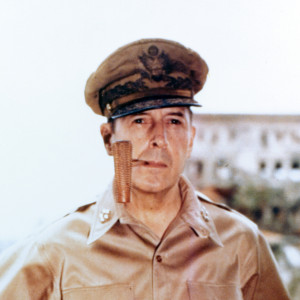 Douglas MacArthur

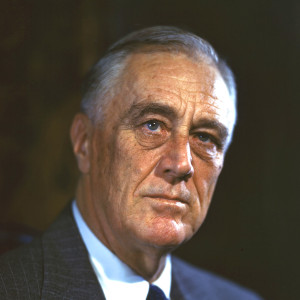 Franklin Delano Roosevelt
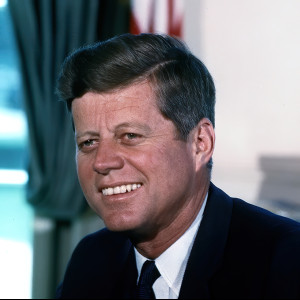 John F. Kennedy
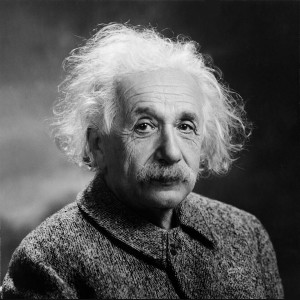 Albert Einstein
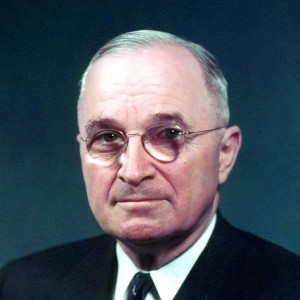 Harry S. Truman
 Anwar Al-Sadat
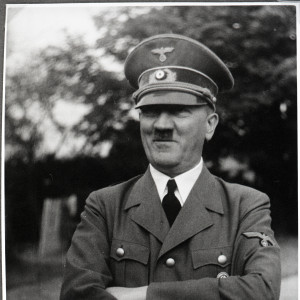 Adolf Hitler
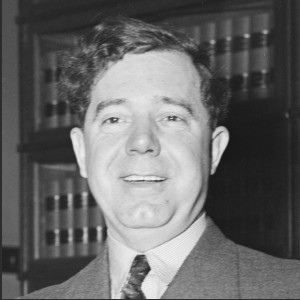 Huey P. Long