 Anwar Al-Sadat
 → Speeches and works → Signing of the Egypt-Israel Peace Treaty


Anwar al-Sadat's speech on March 26, 1979, marked the beginning of a historic peace between Egypt and Israel, formally ending decades of conflict. This led to Egypt becoming the first Arab nation to recognize Israel and established diplomatic ties, which fundamentally altered the geopolitical landscape of the Middle East. Despite severe criticism from the Arab world and Sadat's later assassination, the peace treaty has endured and remains a cornerstone of Egyptian-Israeli relations.
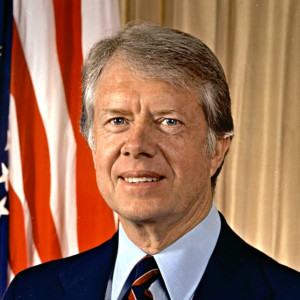
Hosted by U.S. President Jimmy Carter at the White House, the signing of the Egypt-Israel Peace Treaty brought together Egyptian President Anwar al-Sadat and Israeli Prime Minister Menachem Begin to formally end decades of hostilities between their nations. The treaty, a result of the Camp David Accords brokered by Carter, marked a significant step towards peace in the Middle East. The event was seen as a major achievement in U.S. foreign policy, although it was met with mixed reactions globally, especially within the Arab world.
The audience expected Anwar al-Sadat to solidify his commitment to peace with Israel, a stance he had taken boldly but controversially in the Arab world. Many hoped he would reaffirm his vision of ending hostilities and ushering in a new era of diplomacy, especially after his historic trip to Jerusalem in 1977. While some looked for reassurance of long-term stability, others, particularly in the Arab world, viewed Sadat’s actions with skepticism, expecting him to address the potential impact on regional unity and the Palestinian cause.
Sadat employed a tone of reconciliation and vision in his speech, using persuasive rhetoric to appeal to both peace advocates and critics. He framed the treaty as a necessary step for lasting stability, emphasizing shared humanity and the future benefits of peace. His use of direct, confident statements underscored his determination, while he subtly acknowledged the risks and opposition he faced, balancing optimism with realism.
Sadat achieved significant success in this event by formally securing peace between Egypt and Israel, a historic milestone that ended decades of hostilities. His speech reinforced his commitment to diplomacy, and the treaty not only led to normalized relations but also established Egypt as a key player in Middle Eastern politics. However, this success came at a high cost, as it provoked strong opposition from the Arab world and led to Egypt’s temporary suspension from the Arab League. Despite these challenges, the peace agreement has endured, marking a lasting achievement.
This speech shows the power of balancing directness with emotional appeal in public speaking. Using clear, strong statements to convey a message of peace, while acknowledging opposition, creates both authority and empathy. By framing his vision in terms of shared goals and the future, the speaker connects with diverse audiences. Additionally, blending personal conviction with broader themes of diplomacy and reconciliation helps the speaker establish credibility while addressing the complex realities of the situation.
President Carter, dear friends:
This is certainly one of the happiest moments in my life. It is a historic turning point of great significance for all peace-loving nations. Those among us who are endowed with vision cannot fail to comprehend the dimensions of our sacred mission. The Egyptian people, with their heritage and unique awareness of history, have realized from the very beginning the meaning and value of this endeavor.
In all the steps I took, I was not performing a personal mission. I was merely expressing the will of a nation. I'm proud of my people and of belonging to them.
Today, a new dawn is emerging out of the darkness of the past. A new chapter is being opened in the history of coexistence among nations, one that's worthy of our spiritual values and civilization. Never before had men encountered such a complex dispute, which is highly charged with emotions. Never before did men need that much courage and imagination to confront a single challenge. Never before had any cause generated that much interest in all four corners of the globe.
Men and women of good will have labored day and night to bring about this happy moment. Egyptians and Israelis alike pursued their sacred goal, undeterred by difficulties and complications. Hundreds of dedicated individuals on both sides have given generously of their thought and effort to translate the cherished dream into a living reality.
But the man who performed the miracle was President Carter. Without any exaggeration, what he did constitutes one of the greatest achievements of our time. He devoted his skill, hard work and, above all, his firm belief in the ultimate triumph of good against evil to ensure the success of our mission.
To me he has been the best companion and partner along the road to peace. With his deep sense of justice and genuine commitment to human rights, we were able to surmount the most difficult obstacles.
There came certain moments when hope was eroding and retreating in the face of crisis. However, President Carter remained unshaken in his confidence and determination. He is a man of faith and compassion. Before anything else, the signing of the peace treaty and the exchanged letter is a tribute to the spirit and ability of Jimmy Carter.
Happily, he was armed with the blessing of God and the support of his people. For that we are grateful to each and every American who contributed in his own way to the success of our endeavor.
We are also heartened by the understanding of hundreds of thousands of Israelis who remained unwavering in their commitment to peace. The continuation of this spirit is vital to the coronation of our effort.
We realize that difficult times lay ahead. The signing of these documents marks only the beginning of peace. But it is an indispensable start. Other steps remain to be taken without delay or procrastination. Much will depend on the success of these steps. We are all committed to pursue our efforts until the fruits of the comprehensive settlement we agreed upon are shared by all parties to the conflict.
President Carter once said that the United States is committed without reservation to seeing the peace process through until all parties to the Arab-Israeli conflict are at peace. We value such a pledge from a leader who raised the banners of morality and ethics as a substitute for power politics and opportunism.
The steps we took in the recent past will serve Arab vital interests. The liberation of Arab land and the reinstitution of Arab authority in the West Bank and Gaza would certainly enhance our common strategic interests.
While we take the initiative to protect these interests, we remain faithful to our Arab commitment. To us, this is a matter of destiny. Pursuing peace is the only avenue which is compatible with our culture and creed.
Let there be no more wars or bloodshed between Arabs and Israelis—let there be no more wars or bloodshed between Arabs and Israelis. Let there be no more suffering or denial of rights. Let there be no more despair or loss of faith. Let no mother lament the loss of her child. Let no young man waste his life on a conflict from which no one benefits. Let us work together until the day comes when they beat their swords into plowshares and their spears into pruning hooks. And God does call to the abode of peace. He does guide whom He pleases to His way.
[At this point, President Sadat repeated the last two sentences in Arabic.]
Thank you.


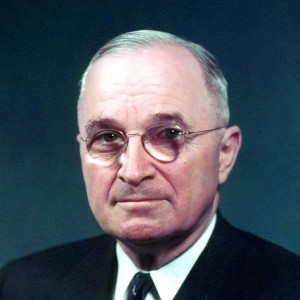 Harry S. Truman
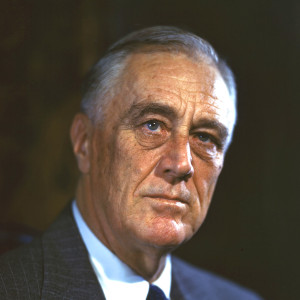 Franklin Delano Roosevelt
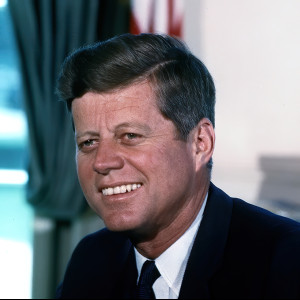 John F. Kennedy
 Douglas MacArthur
 Albert Einstein
 Richard M. Nixon
 Jimmy Carter
 Ronald Reagan