 → Speeches and works → Enough of Blood and Tears


Yitzhak Rabin's speech on September 13, 1993, at the signing of the Oslo Accords, marked a pivotal moment in the Israeli-Palestinian peace process by publicly committing both sides to peaceful coexistence. His call for an end to decades of bloodshed—emphasized by the famous words, "Enough of blood and tears"—paved the way for the creation of a Palestinian self-government in parts of the West Bank and Gaza and inspired hope for future reconciliation between Israelis and Palestinians.
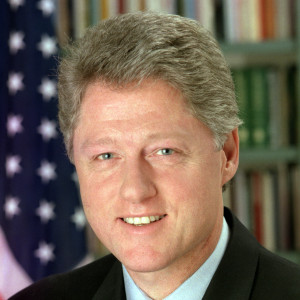
On September 13, 1993, Washington, D.C. witnessed a historic moment as the Oslo Accords were signed on the White House lawn, signaling the first formal agreement between Israel and the Palestine Liberation Organization (PLO). The atmosphere was charged with anticipation as President Bill Clinton hosted the event, which brought together Israeli Prime Minister Yitzhak Rabin and PLO Chairman Yasser Arafat. Their handshake, symbolizing a commitment to peace after decades of conflict, was seen by many as a groundbreaking step toward resolving the Israeli-Palestinian conflict. The event was attended by global dignitaries and marked by speeches that called for a hopeful new era in the Middle East.
The international public of the signing of the Oslo Accords expected Yitzhak Rabin to deliver a message of hope and peace after decades of conflict between Israelis and Palestinians. Many viewed him as a former soldier now committing to diplomacy, and there was an expectation that he would firmly advocate for reconciliation and coexistence. Rabin's speech needed to signal a real commitment to ending violence and fostering mutual respect. Both Israelis and Palestinians, as well as the international community, anticipated his call for a future free of war, particularly after years of tension and bloodshed.
Rabin employed several powerful techniques in his speech. He used personal experiences as a soldier to establish emotional connection, reflecting on the pain and loss of war, which struck a chord with both Israelis and Palestinians. His speech was rich in direct address, speaking to the Palestinians with phrases like, "we say to you today", making it feel immediate and personal. He also used repetition for emphasis, notably the phrase "Enough of blood and tears", to drive home his call for peace. Finally, he incorporated religious references, quoting from Ecclesiastes, to connect the moment to both Jewish tradition and the universal yearning for peace.
Rabin's speech at the signing of the Oslo Accords is seen, somewhat, as a success in terms of its impact on the peace process. He successfully conveyed a message of reconciliation, appealing directly to both Israelis and Palestinians by acknowledging their shared suffering and desire for peace. His message captured the emotional gravity of the moment and underscored the urgency for change. However, while the speech and the accords themselves were a diplomatic breakthrough, the ultimate success of his efforts was hindered by subsequent violence and political setbacks. Palestinian militant groups, such as Hamas, rejected the peace process and launched attacks, including suicide bombings in Israeli cities, targeting civilians. On the Israeli side, Yitzhak Rabin was assassinated in November 1995 by a Jewish extremist, Yigal Amir, it was a profound shock to the peace efforts and demonstrated the intense internal divisions within Israeli society. All of this limited the long-term effectiveness of the peace process.
The speech shows the power of personal experience and emotional appeal in public speaking. By drawing on his history as a soldier and the collective pain of war, he connected with his audience on a deeply human level. The use of repetition emphasized his core message and made it more memorable. His use of direct address allowed him to engage both Israelis and Palestinians, making the speech feel personal and urgent. Additionally, integrating cultural and religious references grounded his message in shared values, enhancing its impact.
Mr. President, Ladies and Gentlemen,
This signing of the Israeli-Palestinian Declaration of Principles, here today, is not so easy neither for myself, as a soldier in Israel's wars, nor for the people of Israel, not to the Jewish people in the Diaspora who are watching us now with great hope, mixed with apprehension.
It is certainly not easy for the families of the victims of the wars, violence, terror, whose pain will never heal. For the many thousands who have defended our lives in their own, and even sacrificed their lives for our own for them, this ceremony has come too late. Today, on the eve of an opportunity for peace and perhaps an end of violence and wars we remember each and every one of them with everlasting love.
We have come from Jerusalem, the ancient and eternal capital of the Jewish people. We have come from an anguished and grieving land. We have come from a people, a home, a family that has not known a single year not a single month in which mothers have not wept for their sons. We have come to try and put an end to the hostilities, so that our children, our children's children, will no longer experience the painful cost of war, violence and terror. We have come to secure their lives and to ease the sorrow and the painful memories of the past to hope and pray for peace.
Let me say to you, the Palestinians: We are destined to live together on the same soil, in the same land. We, the soldiers who have returned from battle stained with blood, we who have seen our relatives and friends killed before our eyes, we who have attended their funerals and cannot look into the eyes of their parents, we who have come from a land where parents bury their children, we who have fought against you, the Palestinians -
We say to you today in a loud and a clear voice: Enough of blood and tears. Enough. We have no desire for revenge. We harbor no hatred towards you. We, like you, are people who want to build a home, to plant a tree, to love, to live side by side with you in dignity, in empathy, as human beings, as free men. We are today giving peace a chance, and saying again to you: Enough. Let us pray that a day will come when we all will say: Farewell to the arms.
We wish to open a new chapter in the sad book of our lives together a chapter of mutual recognition, of good neighborliness, of mutual respect, of understanding. We hope to embark on a new era in the history of the Middle East. Today, here in Washington, at the White House, we will begin a new reckoning in relations between peoples, between parents tired of war, between children who will not know war.
President of the United States, Ladies and Gentlemen,
Our inner strength, our high moral values, have been derived for thousands of years from the Book of Books, in one of which, Koheleth, we read:
To every thing there is a season, and a time to every purpose under heaven:
A time to be born, and a time to die;
A time to kill, and a time to heal;
A time to weep and a time to laugh;
A time to love, and a time to hate;
A time of war, and a time of peace.'
Ladies and Gentlemen, the time for peace has come.
In two days, the Jewish people will celebrate the beginning of a new year. I believe, I hope, I pray, that the new year will bring a message of redemption for all peoples: a good year for you, for all of you. A good year for Israelis and Palestinians. A good year for all the peoples of the Middle East. A good year for our American friends, who so want peace and are helping to achieve it, for Presidents and members of previous administrations, especially for you, President Clinton, and your staff, for all citizens of the world: may peace come to all your homes.
In the Jewish tradition, it is customary to conclude our prayers with the word 'Amen'. With your permission, men of peace, I shall conclude with words taken from the prayer recited by Jews daily, and whoever of you volunteer, I would ask the entire audience to join me in saying 'Amen':
"He maketh peace in His high places. He shall make peace for us and for all of Israel. And they shall say: Amen." (translation from Hebrew)

 Yitzhak Rabin

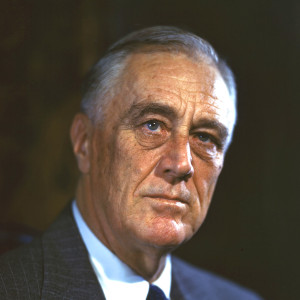 Franklin Delano Roosevelt
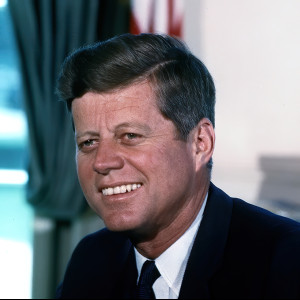 John F. Kennedy
 Douglas MacArthur
 Albert Einstein
 Harry S. Truman
 Bill Clinton
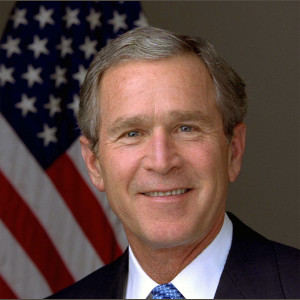 George W. Bush