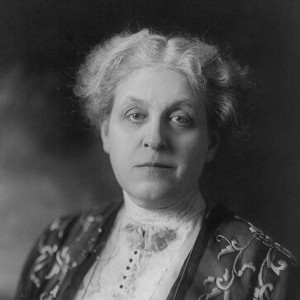
 → Personalities → Carrie Chapman Catt


Carrie Chapman Catt was a leader in the women's suffrage movement, culminating in the ratification of the Nineteenth Amendment to the U.S. Constitution in 1920, granting women the right to vote. Her strategic vision, notably through the "Winning Plan," effectively coordinated state and national efforts to achieve this monumental goal. Additionally, Catt's founding of the League of Women Voters in 1920 ensured a continuing platform for women's education and participation in politics, marking her as a pivotal figure in not only securing women's suffrage but also in promoting women's roles in the democratic process.
She was born in Ripon, Wisconsin, in 1859 and later moved to Charles City, Iowa, with her family. She excelled academically, becoming the only woman in her graduating class at Iowa State Agricultural College. Her early career saw her advance from a teacher to superintendent of schools in Mason City, Iowa. Her personal life was marked by the early death of her first husband, Leo Chapman, and her subsequent marriage to George Catt, which financially enabled her to dedicate herself to the women's suffrage movement. Beyond suffrage, she also advocated for peace and founded organizations to educate women on political issues.
After the sudden death of her first husband, she found herself a young widow and turned to writing to support herself. She authored a novella titled "Zenobia" in 1887 and followed it up with "The American Sovereign" in 1888, showcasing her resilience and adaptability. These literary efforts reflect not just her intellectual prowess but also her ability to navigate and overcome personal adversity through creative expression.
She had a pivotal role in the women's suffrage movement, particularly her strategic orchestration of the campaign that led to the ratification of the Nineteenth Amendment to the U.S. Constitution. This amendment, ensuring women's right to vote, marked the culmination of decades of advocacy and struggle. Her ability to unite various factions within the movement and her innovative "Winning Plan," which focused on securing suffrage through both state and national efforts, were instrumental in achieving this historic victory. Furthermore, her establishment of the League of Women Voters immediately afterward highlighted her commitment to ensuring that women's new-found electoral power was educated, informed, and effectively utilized.
Carrie Chapman Catt was renowned for her exceptional oratory skills and persuasive writing, qualities that significantly contributed to her effectiveness as a leader in the women's suffrage movement. Her speeches were known for their clarity, compelling arguments, and ability to mobilize a diverse audience towards the cause of women's suffrage. As a writer, her works were insightful and articulate, blending factual accuracy with a passionate appeal for justice and equality. These abilities allowed her to communicate the suffrage message powerfully and effectively, rallying support across the United States and internationally.
Throughout her career, this influential figure produced numerous speeches and writings that played a crucial role in advancing the women's suffrage movement. Among her most significant contributions is her advocacy through the "Winning Plan," which outlined a detailed strategy for securing the vote through both state and federal amendments. Her speeches, characterized by their persuasive power and eloquent delivery, were instrumental in rallying support and unifying the suffrage movement. Additionally, her publication, "Woman Suffrage and Politics: The Inner Story of the Suffrage Movement," co-authored in 1923, provides a comprehensive account of the strategic planning, challenges, and triumphs of the suffrage campaign. This work remains a vital resource for understanding the complexities and dynamics of the movement, showcasing her analytical depth and ability to convey the suffrage cause's significance and impact.
Her ability to articulate the cause through powerful speeches and writings mobilized widespread support and unified the suffrage movement, demonstrating her exceptional skills as both a speaker and a writer. Beyond suffrage, she founded the League of Women Voters, ensuring women's informed participation in democracy, and advocated for peace and disarmament, highlighting her broader commitment to social justice and equality. Catt's legacy extends beyond the right to vote, embodying the relentless pursuit of democracy, equality, and human rights.
Catt's writing and speaking were characterized by their clarity, emotional appeal, and meticulous organization. She often used personal anecdotes and vivid imagery to make her arguments more relatable and impactful. Her speeches and writings are excellent examples of how effective communication can drive social change by inspiring and mobilizing people towards a common goal.
Studying the work of Carrie Chapman Catt can significantly impact our understanding of civic responsibility, the importance of political engagement, and the power of collective action. Her strategies and methods for advocating change not only offer a blueprint for successful activism but also inspire courage and determination in facing societal injustices. Engaging with her legacy encourages us to a deeper appreciation for the rights and freedoms current generations enjoy, reminding us of the role we can play in shaping a more equitable future. Through her example, we learn the value of perseverance, strategic planning, and the importance of using our voice to advocate for ourself and others in the pursuit of democracy and equality.