




 العربية; مولانا ابوالکلام آزاد (Maulana Abul Kalam Azad)
 اُردو; मौलाना अबुल कलाम आज़ाद (Maulana Abul Kalam Azad)
 हिन्दी; মাওলানা আবুল কালাম আজাদ (Maulana Abul Kalam Azad)
 বাংলা
 → Personalities → Maulana Azad


Maulana Azad significantly impacted India's education system as the first Minister of Education after independence. He championed free and compulsory primary education, founded institutions like the Indian Institutes of Technology (IITs) and the University Grants Commission (UGC), and emphasized the integration of cultural and scientific education. His initiatives laid the groundwork for modern education in India, ensuring access to education for all children and fostering a blend of eastern and western educational philosophies.
Born on November 11, 1888, in Mecca, he was raised in a scholarly environment with extensive home-schooling in Calcutta. His early intellectual pursuits saw him mastering various languages and disciplines. By his teenage years, he was deeply involved in journalism and anti-colonial activism, founding influential publications that promoted Indian nationalism and Hindu-Muslim unity. Throughout his life, he was a key figure in the Indian independence movement, participating in major events like the Khilafat and Quit India movements, and later became a central figure in shaping post-independence India's education system. He passed away on February 22, 1958, in Delhi.
During his early years, he exhibited a remarkable precocity, running a library, a reading room, and a debating society before the age of twelve. By fifteen, he was already teaching a class of students, most of whom were twice his age. His youthful intellect and curiosity were so profound that he planned to write a biography of the medieval philosopher Al-Ghazali by the time he was twelve.
Despite his steadfast opposition to the partition of India, he witnessed the violent and heartbreaking events that ensued during the country's division in 1947. He traveled through the violence-affected regions of Bengal, Assam, and Punjab, working tirelessly to establish refugee camps and ensure the provision of food and basic resources to those displaced and suffering. This period deeply affected him, as the communal violence shattered his dreams of a united, secular India.
As India's first Minister of Education, he laid the foundation for the country's modern educational framework. He advocated for free and compulsory primary education for all children up to the age of 14, emphasizing the need for a well-rounded education system that integrated cultural and scientific learning. He established institutions like the Indian Institutes of Technology (IITs), the University Grants Commission (UGC), and played a crucial role in founding the Jamia Millia Islamia. His efforts extended to creating programs for school and college construction, and he was instrumental in promoting universal primary education and adult literacy programs.
He was renowned for his eloquence and clarity, both in his writings and in his speeches. His weekly Urdu newspaper, Al-Hilal, became a powerful platform for advocating Indian nationalism and Hindu-Muslim unity, demonstrating his ability to inspire and mobilize people through his words.
His most important written work was "India Wins Freedom", published posthumously in 1959. This autobiographical account provides an insider's perspective on the Indian independence movement and the events leading up to it, offering a detailed narrative of the political landscape, the challenges faced, and the key decisions that shaped modern India.
Also, another significant work is "Ghubar-e-Khatir", published in 1946. This collection of letters, written during his imprisonment, reflects his philosophical insights and thoughts on various socio-political issues. The letters showcase his eloquence and deep intellectual engagement with contemporary matters, making them a valuable resource for understanding his views and the political context of his time.
His work in the Indian independence movement and his efforts in establishing a robust educational system in post-independence India contributed significantly to shaping a united and educated society. His vision for a secular, inclusive India set the foundation for many national policies and institutions.
We can learn the power of clear, persuasive communication from his works. His communication abilities combined with his commitment to truth and justice, highlights the importance of integrity and eloquence in both writing and public speaking
Studying his work can deeply enrich our understanding of the principles of leadership, resilience, and advocacy for social justice. His writings and speeches provide timeless lessons in effective communication, intellectual rigor, and the importance of striving for educational and communal harmony, which are crucial for personal growth and societal contribution.

 https://en.wikipedia.org/wiki/Maulana_Azad
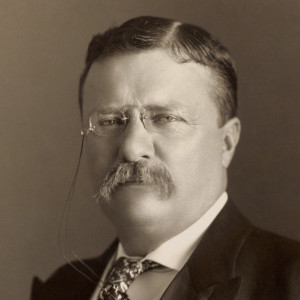 Theodore Roosevelt
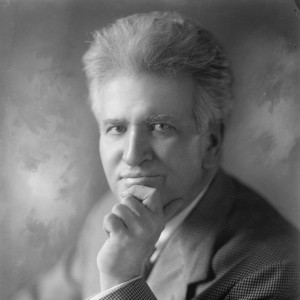 Robert Marion La Follette