 Tenzin Gyatso
 → Speeches and works → A Universal Responsibility for One Another and the Planet We Share


Tenzin Gyatso's 1989 Nobel Peace Prize (as the 14th Dalai Lama) acceptance speech reinforced global recognition of non-violence as a powerful method for resisting oppression, particularly in the Tibetan struggle against Chinese rule. It emphasized the need for compassion and mutual responsibility among all people, influencing international perspectives on peaceful activism and environmental care. His call for dialogue and his vision of Tibet as a zone of non-violence drew attention to both human rights and environmental issues on a global scale.
On December 10, 1989, Oslo, Norway, was in the spotlight as it hosted the Nobel Peace Prize ceremony for the 14th Dalai Lama. This event came during a period of significant global political change, with the fall of the Berlin Wall just a month earlier, signaling the collapse of Communist regimes across Eastern Europe. Norway, a neutral country, was an active supporter of global peace initiatives, and the ceremony reflected its commitment to promoting non-violence, human rights, and environmental stewardship amid the transformative political landscape of the late Cold War era.
The audience at the event expected the Dalai Lama to deliver a message emphasizing peace, compassion, and non-violence. Many hoped he would address Tibet's ongoing struggle under Chinese occupation and offer insights on how to approach conflicts with a focus on human dignity and rights. Furthermore, there was anticipation around his vision for global responsibility, given his reputation as a spiritual leader advocating for both human and environmental welfare. His ability to bridge Eastern philosophical wisdom with contemporary global issues drew widespread interest.
During the event, the Dalai Lama employed techniques like repetition and appeals to shared human values, such as compassion and responsibility, to emphasize unity and collective action. His tone was humble yet firm, drawing on both personal anecdotes and historical references, like the ancient Tibetan-Chinese treaty, to strengthen his arguments. He also used contrast, juxtaposing the suffering in Tibet with the potential for peaceful resolutions, and invoked the moral authority of figures like Mahatma Gandhi to underline the power of non-violence.
The Dalai Lama’s speech was seen as a success, since it solidified his global reputation as a leader of peace and compassion. He effectively communicated the Tibetan struggle without inciting anger or hatred, advocating for non-violent solutions. His emphasis on universal responsibility and the interconnectedness of humanity struck a chord with many, aligning his message with broader global concerns like human rights and environmental sustainability. While his calls for negotiations with China were not immediately realized, the event elevated awareness of Tibet's plight and highlighted the enduring power of peaceful advocacy.
This speech demonstrates the effectiveness of simplicity, humility, and universal themes in both writing and public speaking. By using clear, relatable language and focusing on values such as compassion and responsibility, it fosters connection with the audience. The speaker balances personal conviction with respect for diverse beliefs, while reinforcing key messages through repetition. Historical references and moral examples, like those of Gandhi, strengthen the arguments without overwhelming the listener, showing how combining emotion with logical appeal can make a lasting impact.
Your Majesty, Members of the Nobel Committee, Brothers and Sisters:
I am very happy to be here with you today to receive the Nobel Prize for Peace. I feel honoured, humbled and deeply moved that you should give this important prize to a simple monk from Tibet. I am no one special. But, I believe the prize is a recognition of the true values of altruism, love, compassion and nonviolence which I try to practise, in accordance with the teachings of the Buddha and the great sages of India and Tibet.
I accept the prize with profound gratitude on behalf of the oppressed everywhere and for all those who struggle for freedom and work for world peace. I accept it as a tribute to the man who founded the modern tradition of nonviolent action for change – Mahatma Gandhi – whose life taught and inspired me. And, of course, I accept it on behalf of the six million Tibetan people, my brave countrymen and women inside Tibet, who have suffered and continue to suffer so much. They confront a calculated and systematic strategy aimed at the destruction of their national and cultural identities. The prize reaffirms our conviction that with truth, courage and determination as our weapons, Tibet will be liberated.
No matter what part of the world we come from, we are all basically the same human beings. We all seek happiness and try to avoid suffering. We have the same basic human needs and concerns. All of us human beings want freedom and the right to determine our own destiny as individuals and as peoples. That is human nature. The great changes that are taking place everywhere in the world, from Eastern Europe to Africa, are a clear indication of this.
In China the popular movement for democracy was crushed by brutal force in June this year. But I do not believe the demonstrations were in vain, because the spirit of freedom was rekindled among the Chinese people and China cannot escape the impact of this spirit of freedom sweeping many parts of the world. The brave students and their supporters showed the Chinese leadership and the world the human face of that great nation.
Last week a number of Tibetans were once again sentenced to prison terms of up to nineteen years at a mass show trial, possibly intended to frighten the population before today’s event. Their only “crime” was the expression of the widespread desire of Tibetans for the restoration of their beloved country’s independence.
The suffering of our people during the past forty years of occupation is well documented. Ours has been a long struggle. We know our cause is just. Because violence can only breed more violence and suffering, our struggle must remain nonviolent and free of hatred. We are trying to end the suffering of our people, not to inflict suffering upon others.
It is with this in mind that I proposed negotiations between Tibet and China on numerous occasions. In 1987, I made specific proposals in a five-point plan for the restoration of peace and human rights in Tibet. This included the conversion of the entire Tibetan plateau into a Zone of Ahimsa, a sanctuary of peace and nonviolence where human beings and nature can live in peace and harmony.
Last year, I elaborated on that plan in Strasbourg, at the European Parliament. I believe the ideas I expressed on those occasions are both realistic and reasonable, although they have been criticised by some of my people as being too conciliatory. Unfortunately, China’s leaders have not responded positively to the suggestions we have made, which included important concessions. If this continues we will be compelled to reconsider our position.
Any relationship between Tibet and China will have to be based on the principle of equality, respect, trust and mutual benefit. It will also have to be based on the principle which the wise rulers of Tibet and of China laid down in a treaty as early as 823 A.D., carved on the pillar which still stands today in front of the Jo-khang, Tibet’s holiest shrine, in Lhasa, that “Tibetans will live happily in the great land of Tibet, and the Chinese will live happily in the great land of China”.
As a Buddhist monk, my concern extends to all members of the human family and, indeed, to all sentient beings who suffer. I believe all suffering is caused by ignorance. People inflict pain on others in the selfish pursuit of their happiness or satisfaction. Yet true happiness comes from a sense of inner peace and contentment, which in turn must be achieved through the cultivation of altruism, of love and compassion and elimination of ignorance, selfishness and greed.
The problems we face today, violent conflicts, destruction of nature, poverty, hunger, and so on, are human-created problems which can be resolved through human effort, understanding and the development of a sense of brotherhood and sisterhood. We need to cultivate a universal responsibility for one another and the planet we share. Although I have found my own Buddhist religion helpful in generating love and compassion, even for those we consider our enemies, I am convinced that everyone can develop a good heart and a sense of universal responsibility with or without religion.
With the ever-growing impact of science on our lives, religion and spirituality have a greater role to play by reminding us of our humanity. There is no contradiction between the two. Each gives us valuable insights into the other. Both science and the teachings of the Buddha tell us of the fundamental unity of all things. This understanding is crucial if we are to take positive and decisive action on the pressing global concern with the environment. I believe all religions pursue the same goals, that of cultivating human goodness and bringing happiness to all human beings. Though the means might appear different the ends are the same.
As we enter the final decade of this century I am optimistic that the ancient values that have sustained mankind are today reaffirming themselves to prepare us for a kinder, happier twenty-first century.
I pray for all of us, oppressor and friend, that together we succeed in building a better world through human understanding and love, and that in doing so we may reduce the pain and suffering of all sentient beings.
Thank you.


 Franklin Delano Roosevelt
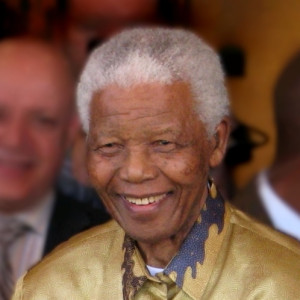 Nelson Mandela
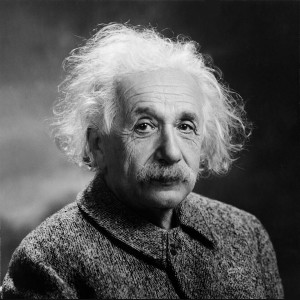 Albert Einstein
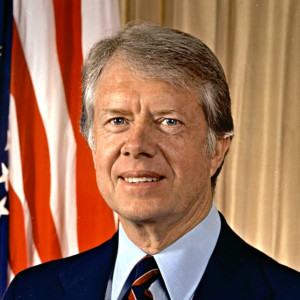 Jimmy Carter
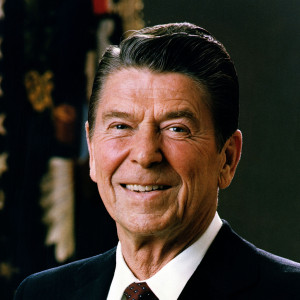 Ronald Reagan
 Bill Clinton