 → Speeches and works → Preparation for Citizenship


Annie Besant’s 1916 speech Preparation for Citizenship emphasized that responsible citizenship begins with education, character development, and intellectual discipline. Delivered to students in Nellore, India, the address reflected her broader educational vision of preparing young people to serve society and contribute to India’s future. Its historical significance lies in promoting the idea that education should prepare individuals not only for personal success but also for responsible participation in public life.
In June 1916, India was under British colonial rule, while the First World War placed growing economic and political pressures on the country. Indian nationalists were increasingly demanding greater political representation and self-government. The Home Rule Movement, led by figures including Bal Gangadhar Tilak and Annie Besant, was gaining momentum through public meetings, newspapers, and political education. On May 26, 1916, Besant had been ordered to provide financial security under colonial press legislation because of her political activities. Her campaign reflected a broader effort to prepare Indians for self-government, a theme particularly relevant to her address Preparation for Citizenship later that month.
The audience, composed of students attending the First Students’ Conference in Nellore, likely expected Annie Besant to provide practical guidance on how to develop into responsible, educated citizens. Given her reputation as an educator and advocate of Indian self-government, they could also have looked to her for inspiration to prepare to contribute to society and India's future.
Annie Besant used rhetorical questions, vivid metaphors, historical and cultural references, and direct address to engage her student audience. She contrasted youthful impatience with the need for preparation, used the grandmother analogy to establish her role as a guide, and employed the image of the nation as a product of its students to emphasize their responsibility. Her practical examples of community service and women's education, combined with appeals to national pride and India's distinctive identity, made her speech both persuasive and instructional.
Her speech appears successful in its purpose of inspiring students to prepare for responsible citizenship. Through persuasive rhetoric, practical examples, and appeals to national pride, she connected personal development with India’s future, emphasizing education, physical well-being, community service, and women’s empowerment. Its clear message and actionable recommendations made it a meaningful contribution to the discussion of education and self-government in India.
Annie Besant’s speech teaches us to combine a clear structure with persuasive language, using rhetorical questions, vivid metaphors, cultural references, and direct audience engagement to make ideas memorable. Effective communication also connects broad principles to practical examples, anticipates the audience’s concerns, and appeals to both reason and emotion. Most importantly, a powerful text or speech should have a clear purpose, inspire reflection, and translate its message into concrete actions that benefit society.
The Grandmother is a great authority in the Indian household and men forty years old consider the Grandmother`s opinion and seek to please and help her. She is a force on the conservative side and being kept away from her childhood from touch with public life she inevitably retards the forward progress of the men who love and honor her. Now I am clearly old enough to be the Grandmother of the members of this Conference, but my Western upbringing has kept me in touch with public life, and hence I am a force, not on the conservative but on the forward side...
As students, whether in school or college, you need to realize the enormous importance of the present years as the preparation for your work in the world. With the natural impatience of youth, you are passionately eager to be acting; but do you understand, do you at all realize, that among the youths now struggling with their books are, as in every other country, the future leaders of the Nation, the Ministers, the Statesmen, the Generals, the Admirals, the Judges, the Merchant Princes, of the coming India?
The Nation of tomorrow is in the schools and colleges of today, and on the knowledge that you are there acquiring, on the characters that you are there building, on the bodies that you are there developing, depends the India of the New Era. For India is changing with extraordinary rapidity, as the entire world acknowledges, and you have the splendid karma of being born in the dawn of her renovated life. The responsibilities of power will fall upon your sholders; you will have to guard your land from external attack and from internal disorder; you will have to develop her arts, her manufactures, her trade, her commerce, her agriculture, to shape her political destiny and to guide her forward evolution. How shall you discharge your mighty task unless you use well this time of preparation, this priceless time, which wasted, cannot be regained. All your life long you will go limping, if you waste these years of your adolescence...
The body is, at present, the weak spot in the Indian Nation. It is a very liable to disease, has poor resisting power, and dies too soon. With some of the causes for this physical weakness, you can do nothing at present, but you can take your body as it is, and improve it...
Another thing you should learn in your school and college days is the Joy of Service. Help those around you, and seek opportunities to help... Sometimes a school or college can start and support a night school or a school for the submerged classes; you can, in towns, visit the hospitals, write letters for patients, carry messages for them. You can start a little co-operative chredit society, and help jutka-wallas, scavengers, and fishermen, to become free from debt.
An one thing you should all do, if you are living at home; you should share your education with the ladies of your families. Teach your sisters to read and write, and any others who are willing to learn. Talk with them of public matters, of the movements going on in the outer world. Take with them pamplets and books in the vernaculars, read to them and with them, and discuss what you read. You will soon find the charm of an educated home, of sympathy in all your interests, the sharing of your hopes and aspirations. Moreover, you will learn much as well as teach. The angles of vision of the boy and girl, of the men and woman are different, and like the two eyes of the body they supplement each other. A man and a woman together see more then either can see separately, as the two-eyed man sees more then the one-eyed, and the combined vision is truer; fuller, more reliable then that of either alone. India is losing incalculably by the lack of the feminine angle of vision, and the awakening of her daughters will be as life from the dead. As Savitri won back her husband from Yama`s noose, so shall Indian womanhood give new life to Indian manhood...
The studies to which you should turn your attention in preparation for public life are history, political economy and logic. The history of your own country you should study, both for inspiration and for pratical guidance; for a Nation is a continuum, and must build its present on its past. The India of the future will not be a copy of the West, she will sui generis, shaping herself by her own ideals, and not imitating the forms of other Nations. She may learn from all while she remains Herself, Asiatic not European, Oriental not Occidental, giving as well as taking, teaching as well as learning, herself and not another.

 Annie Besant

 Maulana Azad
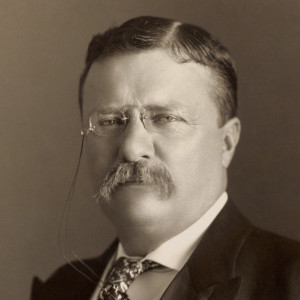 Theodore Roosevelt
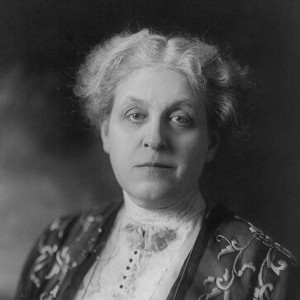 Carrie Chapman Catt
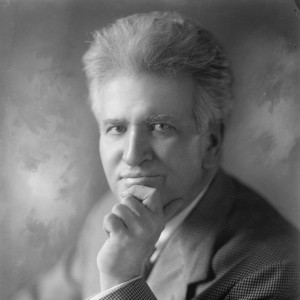 Robert Marion La Follette