



 → Personalities → Annie Besant


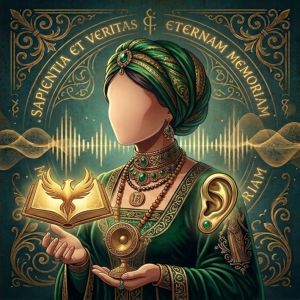
Annie Besant significantly advanced both social reform and Indian nationalism through her work. As a leading member of the Theosophical Society, she promoted spiritual and educational initiatives, founding the Central Hindu College in Varanasi. Her activism in the Indian Home Rule movement and presidency of the Indian National Congress in 1917 were pivotal in advocating for India's self-governance, thereby leaving a lasting impact on the country's independence movement.
Born in 1847 in London, she faced early financial struggles and a troubled marriage, which led to her separation and subsequent challenges as a single mother in Victorian society. Her initial defense of secularism and birth control gave way to a controversial involvement in theosophy and Indian nationalism, highlighting her quest for influence across diverse fields. Her engagement with Freemasonry, particularly through the International Order of Co-Freemasonry, further demonstrated her penchant for unconventional paths. However, her endorsement of Jiddu Krishnamurti as a messianic figure, later renounced by him, and her abrupt ideological shifts drew criticism for perceived opportunism. She continued her activism until her death on September 20, 1933, in Adyar, Chennai, India.
A curious fact from her life is her involvement in the London School Board elections. Running on a platform that promised "No more hungry children", she campaigned with a red ribbon in her hair, delivering fiery speeches at raucous public meetings. Despite the heated political atmosphere and being a woman in a predominantly male domain, she topped the poll in Tower Hamlets with over 15,000 votes, a surprising feat given the era's biases.
During a particularly difficult period, she faced the breakdown of her marriage, leading to a complex legal battle for separation. Victorian laws made divorce nearly impossible for women unless they could prove severe misconduct by their husbands. This legal struggle forced her to accept a separation where she could only see her son for one month a year while retaining custody of her daughter. The societal stigma against divorced women, compounded by her outspoken non-traditional beliefs, left her ostracized and struggling financially.
Her efforts in the Indian independence movement were particularly noteworthy. She founded the Home Rule League in 1916, advocating for self-governance and greater political participation for Indians within the British Empire. She used her oratory skills and political connections to rally support, organizing meetings and writing extensively to promote the cause. Her election as the president of the Indian National Congress in 1917 exemplified her commitment, as she worked tirelessly to bridge the gap between Indian nationalists and the British authorities, pushing for democratic reforms and education improvements.
As a speaker and writer, she was known for her eloquence, persuasive rhetoric, and ability to engage diverse audiences. Her speeches were powerful and impassioned, often drawing large crowds and influencing public opinion. As a writer, her works displayed clarity, strong argumentative skills, and a commitment to social reforms, covering many different topics. Her writings in the National Reformer and various pamphlets demonstrated her intellectual rigor and dedication to challenging societal norms.
One of her most significant written works includes "Thought-Forms", co-authored with Charles W. Leadbeater, which explores the visualization of thoughts and their impact on the human aura. This book is particularly notable for its detailed illustrations and its influence on both spiritualist and artistic communities. Another key work is "The Case for India", where she articulates arguments for Indian self-rule, reflecting her deep involvement in the Indian independence movement. Her autobiography, "Annie Besant: An Autobiography", provides a comprehensive look at her life, detailing her journey from secular activism to spiritual leadership in the Theosophical Society. These writings highlight her intellectual depth and her ability to engage with a wide array of social and political issues.
Also, one of her most controversial works is "Fruits of Philosophy", originally written by Charles Knowlton and co-published by her and Charles Bradlaugh. This book, which dealt with birth control, sparked a major legal battle in 1877 when they were prosecuted under the Obscene Publications Act for disseminating information on contraception. The trial generated widespread public debate and polarized opinions, particularly among the religious and conservative sectors of Victorian society. Despite the scandal and the risk of imprisonment, she vigorously defended the book's content, arguing for the necessity of birth control to allegedly improve the living conditions of the working class.
Her influence spanned multiple arenas, including social reform, women's rights, and the Indian independence movement. As a fervent advocate for birth control, she co-published "Fruits of Philosophy", challenging Victorian norms and promoting reproductive rights. Her leadership in the Theosophical Society helped bridge Western and Eastern philosophies, fostering spiritual dialogue. In India, she played a key role in the fight for self-governance, founding the Home Rule League and presiding over the Indian National Congress, thus significantly contributing to India's journey toward independence.
Examining her writings and speeches reveals the power of clear, persuasive communication. Her ability to present complex ideas in an accessible manner, combined with a passionate delivery, demonstrates how effective rhetoric can mobilize public opinion and advocate for social change. Her works often employed strong arguments and emotional appeals, showing the importance of balancing logic and empathy in discourse. Additionally, her strategic use of public platforms and printed media highlights the significance of choosing the right medium to reach and influence a broader audience.
Her work reveals both the strengths and flaws of a passionate reformer. Her relentless pursuit of social justice, from advocating for birth control to fighting for Indian self-rule, demonstrates the impact of dedicated activism. However, her involvement in controversial movements, such as theosophy, and her endorsement of Jiddu Krishnamurti as a messianic figure, highlight the potential pitfalls of idealism when not tempered by critical scrutiny. Her legacy serves as a complex lesson in the balance between conviction and pragmatism in the pursuit of social change.

 https://en.wikipedia.org/wiki/Annie_Besant
 Abraham Lincoln