 → Speeches and works → Ascent of Life


Dr. Jagdish Chandra Bose's speech on January 3, 1927, at the opening of the 14th session of the Indian Science Congress in Lahore, emphasized the unity of life across all organisms, from plants to animals. His demonstration that plants exhibit responses to stimuli, such as electrical signals, similar to animals, reshaped scientific understanding of plant biology. It also highlighted Bose's significant contributions to biophysics, challenging established notions of life and inspiring further research into plant neurobiology.
In January 1927, Lahore, a key city in British India, was a hub of political and intellectual activity. The Indian independence movement was gaining momentum, with increasing demands for self-rule and a growing sense of nationalism. Lahore itself was a focal point for political gatherings and speeches, such as the annual sessions of the Indian National Congress, which would later pass the resolution for full independence (Purna Swaraj) in 1929. The city was also a center for education and scientific inquiry, with institutions like the University of the Punjab contributing to the vibrant intellectual atmosphere. Amid this backdrop, Dr. Jagdish Chandra Bose's scientific speech reflected the merging of India's scientific advancements with its rising national identity.
The audience attending Dr. Jagdish Chandra Bose's speech anticipated groundbreaking insights from one of India’s foremost scientists. Known for his pioneering work on the physiological responses of plants, Bose had already demonstrated that plants, like animals, could respond to stimuli, a concept that challenged traditional scientific views of that time. His reputation as a visionary in both physics and biology, along with his advocacy for merging Eastern philosophical perspectives with Western scientific methods, meant the public expected him to deliver thought-provoking ideas that transcended conventional science. Many hoped to witness revelations that could reshape their understanding of life and its fundamental processes.
Bose used a combination of scientific precision and philosophical reflection in his speech. He effectively blended technical explanations of plant physiology with deeper, introspective thoughts on the unity of life, capturing both the scientific and emotional attention of the audience. His rhetorical technique was marked by clear, logical progression, leading listeners from established facts to groundbreaking conclusions, while also engaging them through thought-provoking questions about life and its processes.
Bose's speech was a significant success, as it captivated his audience by challenging established scientific views and expanding their understanding of life’s processes. His ability to bridge the gap between advanced scientific discoveries and philosophical insights deeply engaged both intellectuals and laypeople. His demonstration of plant responses to stimuli was not only groundbreaking but also inspired admiration for his innovative approach to science. By connecting plant biology with broader questions about life, he successfully elevated the discourse on the interconnectedness of all living things.
This speech teaches us the power of blending scientific rigor with philosophical depth to engage diverse audiences. By using clear, methodical explanations of complex ideas, the speaker made his groundbreaking discoveries accessible to both experts and non-experts. He also effectively incorporated thought-provoking questions, encouraging the audience to think beyond the immediate scientific facts and consider broader implications. This combination of technical detail and reflective insight can inspire us to present complex ideas, in public speaking and writing, in a way that is both intellectually stimulating and emotionally engaging
In presiding over the Indian Science Congress it is expected that I should give a connected account of my investigations that have been in progress for nearly a third of a century. The results obtained have led to the establishment of the important generalization of the Unity of Life; from this it followed as a corollary, that there must also be an unity of all human efforts and that in the realm of the mind there can be no boundaries and no separations. It is a misreading of the Laws of Nature to regard conflict as the only factor in evolution; far more potent than competition is mutual aid and co-operation in the scheme of life.
Nothing can be more untrue than the ignorant assertion that the world owes its progress of knowledge to any particular race. The whole world is interdependent, and a constant stream of thought has throuhghout the ages enriched the common heritage of mankind.
It is the realization of this mutual dependence that has kept the mighty human fabric bound together and ensured the continuity and permanence of civilization. Hellenistic Greeks and Eastern Aryans had met here in Taxila to exchange the best each had to offer. After many centuries the East and West have met once more and it would be the test of real greatness of two civilizations that both should be finer and better for the stimulus of contact.
When I commenced my investigations about forty years ago, it was held, that by its very peculiar constitution, the Indian mind would always turn away from the study of Nature to metaphysical Specutations. India was regarded as a land of magic and mysticism where no advance of positive knowledge could be expected. This hypnotic suggestion of inaptitude could only be removed after years of effort, and it is only recently that the generous declaration was made at the Meeting of Intellectual Co-operation, League of Nations "that India had hitherto been to the West, a land of dreams; they now recognised that these dreams had led to great discoveries. The intellectual co-operation now inaugurated would open out for the world the enormous reserves of thought of Asia, the cradle of civilization." It is now my good fortune to see that it is not one but all the provinces of India that are contributing to the advance of differrent branches of knowledge as is manifest from the activities of the different sections of this Science Congress.
Although science is neither of the East nor of the West, but international in its uniersality, yet India by her habit of mind and inherited gifts handed down from generation to generation, is specially fitted to make great contributions in furtherance of knowledge. The burning imagination which can extort new order out of a mass of apparently contradictory facts, can also be held in check by the habit of concentration; it is this restraint which confers the power to hold the mind in pursuit of truth in infinite patience. The specific requirements for making great discoveries are vivid imagination, clear inner vision, great faculties of invention and experimental skill of the highest order. In order to discover the life mechanism of the interior of the tree one has to become the tree and feel the throbbing of its beating heart. This inner vision is, however, to be frequently tested by results of experimentation; for otherwise it may lead to the wildest speculation subversive of all intellectual sanity. A true inquirer has at every step to compare his own thought with objective reality; he has remorselessly to abandon all in which these are not agreed. Even in this path of self-restraint and verification, he is making for a region of surpassing wonder. When the note of the audible reaches the unheard even then he gathers the tremulous message. Undaunted by limitations of our senses, he has to create artificial organs of unimaginanble sensitiveness which requires great genius of invention and skill of construction. It is enough to say that Indian workers have shown a special aptitude in advancing science by their faculty of introspection, experimental skill and great power of invention.
The present unrest in India, as in Europe, is due to severe economic distress. On account of its magnitude, the danger is more acute here than anywere else. In my travels I found poverty pratically unknown in Norway and Denmark. The miracle is accomplished through science by utilizing to the utmost all the available resources of the contry. For the economic welfare of a vast continent like India, there must always be two complementary activities, agriculture and industry. On account of the uncertainty of rainfall entire reliance cannot be placed on agriculture alone. There are, on the other hand, vast possibilities in exploitation of mineral resources and in the advance of industries. The Universities are turning out every year a large number of young men trainded in methods of science, who form the most important intellectual asset of the country, and who at present find no scope for their activities. It is the function of high statesmanship to foresee the economic danger and so shape the state policy that India`s trained youth and her great potential wealth may be utilized for the benefit of the country. For this, the nation will willingly meet the necessary large expenditure, provided that the money is wisely spent for enriching India and in opening out wider spheres of activity for her children. There is also a large field of enterprise where Indians and Englishmen could, as partners, find opportunities for co-operation and higher appreciation of each other.
Previous observers have been misled by the apparent differences between the reactions of animal and plant life. The animal responds to a shock by a twiching movement, while ordinary plants are supposed to be insensitive to a succession of blows. Animals possess sense organs which pick up messages from without, the tremor of excitation being conducted by means of the nervous tissue to the distant motile organ which it causes to move; the plant is supposed not to possess any such conducting tissue. A throbbing organ beats continuously in the animal, for circulation of the nutrient fluid; no similar organ has been suspected in the plant. Two streams of life are thus imagined to flow side by side with little in common between them. This view is wholly incorrect and it is the paralysing influence of wrong speculations that had arrested the advance of knowledge.
In opposition to current views, I was convinced that the mechanism of life of the plant is essentially similar to that of the animal. The demonstration of this would undoubtedly constitute a scientific generalization of very great importance. For it would then follow that the complex mechanism of the animal machine that has so long baffed us, need not remain inscrutable for all time, since the intricate problems of animal life would naturally find their solution in the study of corresponding problems in the simpler vegetable life. This would mean the possibility of very great advance in the sciences of General Physiology, of Agriculture, of Medicine and even of Psychology.
The real difficulty that thwarts the investigator at every step arises from the fact that the interplay of life-action is taking place within the dark profundities of the tree, which our eyes cannot penetrate. In order to reveal the intricate mechanism of its life, it is necessary to gain access to the smallest unit of life, the 'life atom' and record its throbbing pulsation. When microscopic vision fails we have still to explore the realm of the invisible. Until this is done, the intricate problems of life will remain unsolved.
The experimental difficulties have been successfully removed by the invention and construction, in my Institute, of instruments of extreme delicacy and sensitiveness. These new devices by their automatic records, are now revealing the inner mechanism of life, and many regions of inquiry are now opened out which had hitherto been regarded as beyound the scope of experimental exploration. Out of a large number of inventions I will describe a few which render signal service in revealing the hidden activities of life. The High Magnification Crescograph instantly records the imperceptible growth, and the variation induced in it under chemical or electrical stimulation. The Magnetic Crescograph records movements beyound the highest powers of the microscope, the magnification produced being about 50 million times. Science is measurement, and this method of super-magnification has opened out possibilities for great advance in various branches of science. The resonant Recorder, inscribes time as short as a thousandth part of a second, and enables the most accurate determination of the latent or perception period of the plant, and the velocity of transmission of excitation. The Conductivity Balance enables the determination of the effect of various drugs in enhancement or depression of the nervous impulse. The Electric Probe localises the conductiong tissue for the transmission of impulse as also certain pulsating layer of cells in the interior of the tree. The Electric Phytograph is the only device for record of the rate of the ascent of sap and the variation induced in it. The Transpirograph has enabled determination of the quantity of water transpired by a single stoma of the leaf. The Optical Sphygmograph records the pulse-beat of the plant and its modification under various drugs. The Photosynthetic Recorder automatically inscribes on a moving drum the rate of carbon-assimilation by plants. It is so extremely sensitive that it detects the formation of carbohydrate as minute as a millionth of a gram. The Magnetic Radiometer enables accurate measurement of energy of every ray in the solar spectrum. In conjunction with a special Calorimeter, it has enabled the most accurate determination of the efficiency of the chlorophyll-apparatus of green plants in storage of solar energy.
Every organ of a living being is an instrument, subserving a particular function for the advantage of the organism. In physiology or the study of the phenomena of life, we are primarily concerned with investigations on the function of the organ and not of its form. This will be clearly understood from the comparative study of different types of digestive organs the primary function of which is to dissolve insoluble organic food by secretion from glands, and the subsequent absorption of the dissolved product. In Drosera rolundifolia the leaves are covered with tentacles which discharge a viscid acid secretion. Insects are caught by the secretion and during their struggle the neighbouring tentacles bend over and hold the victims more securely. The insects then become dissolved and digested, the insoluble skeleton being left behind. Nothing could be so strikingly different as this simple type of an open digestive organ from that of the more complex infolded stomach of the animal. Yet functionally one is as much a digestive organ as the other. In the case of Venus Fly-trap or Dionaca, a trap is formed by the two halves of the open leaf which acts like a gaping mouth closing upon its pray - the captured insect. In the bag-like pitcher of Nepenthe, the digestive organ of the plant approximates more closely to the stomach of an animal.
The plant world affords an unique opportunity for studying the changes by which a simple and primitive organ becomes gradually transformed into one of greater complexity.
The evolutionary process has been active not only in morphological differentiation, that is, in the development of new forms, but also in physiological differentiation, that is, in the development of specialised mechanisms for performance of the various vital functions. There still exists a long prevalent idea that physiological mechanisms of animals and plants are fundamentally different because they have been developed along separate lines. The evidence I will adduce will suffice to show that this idea is totally unfounded.
The most important characteristics of certain animal tissues are (1) contractility on account of which response by movement takes place under external stimulus; (2) conductivity or power of transmitting excitation to a distance; and (3) rhythmicity or so called spontaneous movements. We have to investigate whether these characteristics are also to be discovered in the plant.
The above problems are to be studied in greater detail as follows:
We have to find out whether sensitiveness is characteristic only of a few plants, or whether all plants and their different organs are sensitive.
It is necessary to inquire whether muscular organs are present in the plant, whether such organs are simple or whether some of them had attained a high degree of complexity. Various grades of activity are found in different muscular organs, and an attempt will be made to discover the cause of this difference.
Animal tissues are excited by various irritants; are the plant tissues excited by similar agents? Are the effects of various drugs identical in the two cases? Does the effect of poison change with the dose? Is it possible to counteract the action of one poison by means of another which acts as an antidote?
All life movements cease at death; What are the symptoms of death? Is it possible to detect the exact critical moment?
Certain animal tissues like the heart, exhibit rhythmic movements which appear to be initiated without any cause. No explanation had been offered for these mysterious spontaneous or automatic movements. Are there any rhythmic tissues in the plant which beat spontaneously? If so are the characteristics of rhythmic tissues in plant and animal similar? Do investigations on plants lead to the solution of the mystery of spontaneous activity or automatism?
Growth furnishes with one of the most important examples of automatism. Yet the rate of growth in a plant is far below anyting we can directly perceive. How then is growth to be so magnified as to be rendered instantly measurable? What are the conditions which enhance or inhibit growth?
In the animal, the throbbing heart maintains the circulation of blood. Alkaloids produce characteristic modifications of the pumping mechanism, in consequence of which appropriate changes of blood pressure are produced. How is the circulation of sap maintained in the plant? Is the propulsive mechanism in the plant essentially similar to that in the animal, and is the sap-pressure, like the blood-pressure, modified by the specific action of different alkaloids?
Is there any sense-organ in the plant which enables it to orientate itself in regard to the vertical direction? Is the mechanism similar in plant and animal?
For carrying out the incessant activity of its life-movements, the plant has to store a large amount of energy. This process of storage of sunlight is of cosmic importance. The laws of photosynthesis remain to be discovered, and the efficiency of the chlorophyll apparatus in storage of solar energy requires careful redetermination.
Finally the question arises whether the nervous system is confined only to animals, as has been generally supposed or whether the plant also possesses a conducting tissue which functions as a nerve.
How did life make its first appearance on earth? No life, as we understand it now, could have existed when the earth was a mass of molten matter. It has been suggested that the seed of life was imported to this earth by the cosmic dust from other worlds; but this would merely transfer the difficulty backwards. Or perhaps matter itself is sensitive, and has within itself the promise and potency of life, so that at some critical period of the earth`s history, the environmental conditions may have favoured the appearance of life in its present form out of non-life.
My investigations have indeed shown that all matter is sensitive, and that they respond to mechanical or electrical stimulation. Over-stimulation was found to cause fatigue from which there was a recovery after a period of rest. Prolonged rest, however, made the substance inert and irresponsive; it had in fact become lazy through lack of stimulation. A strong shock now stirred it up again into readiness for response. Two opposite treatments are thus indicated for fatigue from overwork, and inertness from long passivity! Other experiments showed moreover, that while stimulating drugs cause an enhancement of response, poisons "kill" it altogether. It would thus appear that sensitiveness is inherent in matter and that there has been a continuous evolution from simple inorganic matter to the highly complex animal life.
The world of plants has been arbitrarily divided into sensitive and ordinary, the former being confined to a small class which like Mimosa pudica exhibits mechanical movement on stimulation. There are other plants, which after stimulation are physically restrained from exhibiting that movement which has hitherto been accepted as a test of sensibility of the tissue. Mechanical movements is, however, not the only manifestation of excitation. For stimulation is found to induce an electrical change in the irritable tissue, the electrical response serving as a very reliable test of the vital condition of a tissue. By the employment of this test, I succeeded in proving that every plant and every organ of the plant is sensitive. The electric response of the plant exhibits an anhancement under stimulating drugs, whereas under narcotics it undergoes a depression. There is a complete abolition of response after the plant is scalded to death.
Movement in response to stimulation is very strikingly manifested by the sensitive pulvinus of Mimosa. The functional similarity between the two contractile organs, pulvinus and muscle, is not confined to the manifestation of outward movement, but can be traced to the ultimate protoplasmic mechanism.
In regard to rapidity of movement of animal muscle, the reaction of the swift animal must be rapid, while in the sluggish, the response is slow. The wing-muscle of a bird of prey like the falcon is very active; that of the goose is less active, while the corresponding muscle of the domestic fowl is almost inactive, its power of flight being practically lost. What is it that confers extreme rapidity of action? Curiously enough, in the leaves of plants also there are three types of motor pulvinus - active, semi-active, and inactive - corrresponding to the three types in the animal.
In Mimosa pudica the rate of movement in response to stimulation is very rapid, the contractile fall being completed in a time as short as a second. In other sensitive plants like Neptunia de rate of movement is so slow that the time taken for the leaf to complete its fall is more than a minute. Finally, the pulvinus of the Runner Bean-plant (Phaseolus) shows a movement which is very feeble and extremely sluggish.
Turning our attention to the motile organ, it is the contraction of the cortical cells of the pulvinus of Mimosa that produces the rapid fall of the leaf. The pulvinus of the Bean-plant is, as already stated, inactive, though its cortical cells are to all appearances similar to those of Mimosa. Anatomical similarity has hitherto been unduly pressed in determining the true function of an organ; the facts given above will show the misleading character of such a criterion. It is not anatomical structure, but the protoplasmic content of a tissue that confers on an organ its physiological efficiency for discharge of a specific function. The motility of an organ is, as we shall presently find, dependent on the presence of a certain active substance in the protoplasm.
Demarcation of muscular tissue. - If we axamine a longitudinal section of the pulvinus of Mimosa under the microscope, it is impossible to observe where the contractile cells begin, where they end, and how they are distributed. I succeeded, however, in distinguishing them by selective staining with safranin. This stain produced the most remarkable results; it appeared as if a hand had, with utmost care, picked out every actively contractile cell and painted its protoplasmic contents a deep crimson. The outline of the contractile tissue now became sharply defined; the stained protoplasmic contetns of the active cells showed under high microscopic magnification, a marked granular appearance. In the semi-active Neptunia, the stained active cells were found to be not at all compact as in Mimosa, but scattered in their distribution. No staining occurred in the pulvinar cells of the inactive Bean-plant, the active substance being here altogether absent. It is very remarkable that the activity of the animal muscle is similarly dependent on the presence and relative distribution of the active substance. The pulvinus of Mimosa may thus be regarded as functionally equivalent to an active muscle.
All movements are ultimately dependent upon oxidation or combustion. In an engine, the speed of the moving machinery is dependent on the rate of consumption of the fuel, the higher the rate of combustion, the greater the rapidity of movement. In the living machine also, the rate of oxidation plays an important part in the production of rapid movement, and in the present case, the active substance is found to be highly oxidisable.
The pulvinus of Mimosa had hitherto been regarded as a simple motor organ which responded by a simple up-or-down-response. In reality its four quadrants act like so many distinct effectos; the upper and lower quadrants execute the up-or-down-movements, whereas the left and right quadrants execute left-handed and right-handed torsions. Thus the leaf by its complex muscular organ, can adjust itself so as to follow the movement of the sun, which enables it to absorb the largest amount of light.
I have succeeded in discovering several exact methods by which the dying organism records its own curve of death. The plant is placed in a thermal bath the temperature of which is gradually raised. At the definite fatal temperature of 60oC, a violent spasm occurs, which corresponds to the death-throe of the animal. An intense electric discharge also takes place at this crisis.
I have recently succeeded in devising a new method, the result of which is somewhat startling. It shows that a plant immersed in a heating bath suddenly loses its buoyancy, and sinks at the fatal temperature.
One of the most puzzling phenomena connected with life is the so-called spontaneous or automatic movements, apparently maintained without any ascertainable cause. Every movement, ordinarily speaking, is due to an antecendent stimulus; but a spontaneously pulsating heart is said to beat of its own accord and therefore regarded as an automatic organ. That is the solution of the mystery of this automatism?
Although such automatic movements are usually associated with animal life, yet similar activities are found in plants like the Telegraph-plant, Desmondium gyrans. I have been able to establish the essential similarity between the automatic pulsation of the Telegraph-plant and that of the animal heart, similar effects being induced under variation of temperature, and under different chemical agents, carbonic acid ether, chloroform and others. Poisonous acids arrest the pulsation of the heart at diastolic expansion; alkaline poison, on the other hand, arrest it at systolic contraction. It is wonderful to discover identical reactions in Desmodium. Poisonous acids arrest the pulsation at diastole, while alkaline poisons produce an arrest at systole. Finally the arrest induced by either of these poisons can be counteracted by the antagonistic action of the other.
These experiments conclusively demonstrate the fundamental identity of the pulsatory mechanism in the animal and in the plant. But the question still remains; what is the cause of these automatic movements?
Two classes of phenomena, are thus observed (1) in which a single stimulus produces a single response, and (2) in which movement takes place apparently without any cause. Is there a hiatus between the two, or is there a connecting link, the discovery of which might lead to an explanation of these mysterious automatic movements? Such a connecting link I have discovered in Biophytum sensitivum, a weed which grows in the neighbourhood of Calcutta. Its sensitive leaflets show excitation by a twitching movement. In experimenting with this plant it was observed that while a single moderate stimulus gives rise to a single response, a stronger stimulus gives rise to a series of multiple responses, the persistence of which depends on the strength and duration of previous stimulation. A portion of the incident stimulus thus becomes stored and held latent for subsequent expression. The response thus echoes, as it were, or reverberates.
Under natural conditions, the plant is exposed to the action of various stimuli, supplied by its environment. It is exposed to heat, to the action of light to the mechanical stimulus of air currents, and to the action of various chemical agents present in it or absorbed by it. From the joint action of these external sources of stimulation, the energy stored up by the plant becomes sufficiently great to cause an excitatory overflow. It was our want of sufficiently penetrative analysis of the previous history of the plant that led to the assumption that these movements were self-caused. The internal stimuli for such automatic movements are, in reality, external stimuli which have become trapped. Biophytum under normal conditions, reacts like an ordinarily responding plant, since it gives a single response to a single moderate stimulation. But under strong stimulation it gives multiple responses which are apparently automatic. The connecting link, Biophytum, demonstrates the continuity between ordinarily and automatically responding plants.
A pronouncedly automatic plant can, on the other hand, be brought down to the condition of an ordinary plant. It is the store of excess energy that enables Desmodium to exhibit spontaneous movements. Depletion of its store of energy by keeping the plant in the dark, soon brought its pulsation to a standstill. A fresh accession of energy was now found to renew the pulsation; a feeble stimulus produced a single response; a stronger stimulus gave rise to a series of multiple responses. When subjected to the normal stimulation of the environment it regained its automatic activity.
The phenomenon of growth furnishes us with another example of automatic activity. Can any similarity be discovered between this and other modes of spontaneous activity? Do variations of external conditions modify all automatic activities in a similar manner?
The question of growth and its modifications under external changes is a matter of great practical importance, for the world`s supply of food depends on the growth of plants. It is therefore, of the highest importance to be able to discover all those conditions which are favourable to growth. In what way do external agencies modify it?
The extreme difficulty of the investigation arises from the extraordinary slowness of growth. Even the proverbial slowmoving snail moves two thousand times faster than the tip of a growing organ. The average rate of growth is about 1/100.000 inch per second, a length which is half that of a single wave of sodium light!
Even with the magnifying growth-recorders, hitherto employed, it takes a very long time to detect and measure the rate. For accurate investigations on the effect of a given agent on growth, it is necessary to keep all other variable conditions, such as light and warmth, strictly constant during the whole period of the experiment. We can keep these conditions absolutely constant for only a few minuts at a time. Experiments which require several hours for their completion are, therefore, subject to serious errors which vitiate the results.
The only satisfactory method is one that reduces the period of the experiment to a few minutes; that, however, necessitates the devising of an apparatus for very high magnifications, and for the automatic record of the magnified rate of growth. This has been accoumplished by my High Magnification Crescograph which records growth magnified from ten thousand to fifty million times.
Like other modes of automatic activity, growth is found to be thythmic or pulsatory. There is a sudden uplift followed by a slower recoil, the amount of recession being about one-fourth of what had been gained. The difference between the two represents permanent growth. The growth process is, therefore, not steady, but is like the wavelets of a rising tide.
Any marked advance in scientific agriculture is only possible if we succeed in discovering agents which greatly enhance the activity of growth. Only a few stimulating agents have been used for this purpose, whereas there are numerous others of whose action we have been profoundly ignorant. The rule-of-thumb method hitherto employed in the application of a few chemical stimulants and of electricity has, moreover, not been uniformly successful. The cause of this anomaly is found in the discovery of an important factor, namely, that of the amount of dose, which has hitherto not been taken into account. I thus find that while a particular intensity of electrical curent accelerates growth, any excess above a critical point retards it. The same is true of chemical stimulants. A striking result was obtained with certain poisons, which in normal doses kill the plant, but in excessively minut doses acted as an extraordinarily efficient stimulant in promoting growth. Plants, in fact, behave in this respect like human beings. Investigations on plants thus open out fresh lines of research for Pharmacology and Medicine.
Not only is growth modified by the intensity of the stimulus, physical or chemical, but also by the point of its application and by the tonic condition of the plant. In regard to the point of application direct stimulation induces a retardation of growth, while indirect stimulation enhances the rate.
In medical practice, anomalies are frequently met with, in which the same drug induces diametrically opposite effects of different individuals. The cause of the anomaly lies in the fact that the tonic level or constitution of different individuals is not the same. For rational treatment, it is essential to take into account the constitution of the patient, for the reaction of a given drug is greatly modified by this tonic condition.
In experimenting with plants, I artificially modified the tone or constitution of different batches of similar seedings. One was kept normal for reference, another depressed to a subtonic condition, and the third raised to an optimum state of exceptional vigour. A measured dose of dilute poison was applied to the three batches of plants. The normal plant survived after a period of struggle. The weaker speciments succumbed at once and without any struggle. But the reaction of the vigorous specimens was quite different; the toxic agent not only failed in its illegitimate work, but actually exalted the growth of its intended victims!
I investigated the range of perception of the plant in regard to the visible and invisible rays. The plant responds to ultra-violet light with its extremely short wave-length. The effect of light on growth declines towards the yellow and the red. As we proceed further into the infra-red region, we come across the vast range of electric radiation the wave-lengths of which vary from the shortest wave that I have been able to produce (0,6 cm) to others which may be miles in length. The results of my investigation show that wireless waves produce characteristic variations in growth, depending on the intensity of stimulus. Feeble waves produce an acceleration, while stronger waves produce a retardation of the rate of growth. The perceptive range of the plant is inconceivably grater than ours; it not only perceives, but also responds to the different rays or the vast aetherial spectrum.
It is perhaps as well that our senses are limited in their range. For life would otherwise have been intolerable under the constant irritation of these ceaseless waves of space-signalling to which brick walls are quite transparent. Hermetically sealed metal chambers would then have afforded us the only protection!
The force of gravity stimulates a plant-member when that member has been removed from the vertical. The problem before us is, first, the determination of the means by which geotropic irritation is effected and second, the exact localisation of the sense organ by which the plant is able to perceive when it is out of the vertical, thereby directing its movement so as to become once more erect. How does the plant perceive the vertical direction in space? Masons get their idea of the exact direction of the force of gravity by the use of the plumb--line that is to say by a hanging weight. And we ourselves obtain the direction of space by means of the semi-circular canals in our internal ear. The contained fluid exerts varying pressure in different positions, and thus gives us an idea of the vertical direction. In the lower animals, the lobster for example, there are ´otoliths´ and sandgrains mingled with tactile hairs, which by their vertical pressure give these animals their sense of direction in space.
There is good evidence that solid particles such as starch grains contained in the cells of certain tissues of plants, serve as otoliths, giving the signal and stimulus for vertical adjustment. Observation of the distribution of the starch grains in the cells and the consideration of the changes in their position led to the theory of statoliths ably advocated by Nêmec, Haberlandt and others.
Various objections have been raised to this theory since the evidence in its support is of an indirect nature. The direct test must lie in ascertaining if the change in position of starch grains is accompanied by a physiological reaction giving an unmistakable signal of perception of geotropic stimulation by the plant, as it is displaced from its normal vertical position.
It is necessary, in fact to make an exploration inside the still living plant to discover if the particular layer containing the statoliths is the one most irritated by geotropic stimulation. This exploration was carried out by my Electric Probe; when the Probe suitably connected with a galvanometer, is slowly thurst into the stem, the galvanometer, by its deflection, shows the state of irritation, if any, of every layer of cells through which it passes. When the stem is vertical there is no sign of any local irritation. The case is very different when the stem is displaced from the vertical to a horizontal position. The geotropically sensitive layer now perceives the stimulus and becomes the focus of excitation as evidenced by the maximum negative electric response registered by the galvanometer. The intensity of responsive electric change is observed to decline in both directions outwards and inwards from the focus. After localising the perceptive layer by the electric explorer, I made a section of the organ, and found that the cells of this layer contained large-sized starch grains which by their wheight were instrumental in causing stimulation. The excitation caused by falling starch grains was thus directly observed.
The question of propulsion of sap in the plant has for a long time been regarded as an insoluble problem. Is it a physical or a physiological phenomenon? Strasburger wrongly imagined that the movement of sap was unaffected by the action of poison: hence various physical theories have been proposed which failed to offer any satisfactory explanation of the phenomenon. My experiments on the action of stimulants which revive the ascent in a dying plant, and of poisons, which abolish it in a vigorous plant prove, on the other hand, that the movement of sap is brought about by a throbbing propulsive tissue which functions both as the pumping heart and artery.
In lower animals such as Amphioxus the propulsive mechanism is an elongated organ in which a series of peristaltic waves propel the nutrient fluid. Even in higher animals, the embryo has an elongated tubular heart. I have been able to demonstrate that the propulsion of sap is not wholly a physical but fundamentally a physiological process, not essentially different from the mechanism of propulsion of blood in the animal.
The normal activity of the animal heart and the change induced under drugs can be found directly by the cardiograph which is essencially a magnifying lever.
The change of cardiac activity can also be indirectly obtained by the pressure-variation on the artery, recorded by the Sphygmograph. When the activity of heart-pump is increased, the blood pressure is increased, a depressant producing the opposite result. The radial artery on the wrist is on the surface and it is not difficult to record its pulsation. But no record is possible when the artery is buried under other tissues.
Turning next to the plant, any attempt to feel its pulse would, by the very nature of the case, appear to be hopeless. If the plant propelled the sap by periodic pulsation of the active layer, the amount of expansion and contraction of each pulse would be beyound even the highest powers of the microscope to detect. The active cells are, moreover, buried in the interior of the plant; how could the invisible and the hidden be rendered visible?
I nevertheless succeeded in my attempt to record the pulse-throb during the passage of the sap-stream as it is pumped up along the stem. The passage of each pulse is attended by an infinitesimal expansion. After the brief passage of the pulse-wave, the stem would revert to its original diameter. In case of identical mechanism in plant and animal, a cardiac stimulant would make the hart-pump of the plant act more energetically, driving the sap faster, causing a greater inflation of the stem. Under depressants the change would be of an opposite character. For recording these infinitesimal dilatations or contractions, it was necessary to construct artificial organs of perception of surpasing delicacy and sensitiviness. The Plant-Feeler or the Optical Sphygmograph, which I have devised, consists of two rods, one of which is fixed and the other movable, the stem of the plant being placed between the two. The movement of the end of the free rod is further magnified by an optical device, the total magnification being about 5 million times. When a dead plant is placed in the apparatus, the indicating line of light remains quiescent, its pulse-beat having been stilled in death. But the imperceptible pulse-beat in the living plant is outwardly manifested by the alterate swings of the beam of light. A depressing agent causes diminished pressure shown by the rush of light to the left, whereas increased pressure caused by a stimulant produces a rush of light-beam to the right. The waxings and warnings of life are thus for the first time revealed by the moving trail of light.
Drugs and alkaloids produce modifications of pulse-beat of animal and of plant which are extraordinarily similar. Those which stimulate the cardiac activity also stimulate the propulsive activity in the plant; depressants, on the other hand, induce opposite effects in both.
Cobra-venom acts on the animal as a deadly poison even in minute quantities. I found the effect on the plant was identical. I was greatly interested to find that a preparation of cobra-venom known as Shuchikavaran, the principal constituent of which is a minute quantity of cobra-poison, has been employed as a cardiac stimulant in the Hindu System of Medicine for nearly a thousand years. I found that minute doses of cobra-venom caused a great stimulation of the pulsating activity of the plant. Similarly, injection of Shuchikavaran in the blood stream of the animal in a state of depression, was found to produce a marked improvement in the frequency and amplitude of pulsation of its heart-beat.
The incessant activities of life require expenditure of energy previously stored by the organism. Taking for example the rise of sap, the easeless activity of the pulsating tissue raises enormous quantities of water to a considerable height. The energy of doing this work resides in the break-down of organic chemical substances in internal combustion or respiration. The loss of energy must be restored by absorption and storage of energy from outside.
The activity of assimilation may be measured either from the volume of carbon-dioxide absorbed or an equal volume of oxygen envolved. The first method is very complicated while the second is simple and direct. My Photosynthetic Recorder automatically records the rate of assimilation on a revolving drum; it also gives audible signals. The automatic method is extremely sensitive and eliminates personal errors of observation.
One of the most astonishing results, was the discovery of the extraordinary increase in the power of assimilation by inconceivable small traces of certain chemical substances. It is found that when these are diluted, one part in a billion, they produce an increase in the power of assimilation of more than a hundred per cent. Formaldehide, which in large doses acts as a poison, is found in a solution of one part in a billion, to produce an increase of activity of eighty per cent. The stimulating effect of traces of formaldehide has a special significance in regard to the "first product" of photosynthesis, which is believed to be formaldehyde. The poisonous nature of this substance stood in the way of acceptance of this view, but the experiment just described shows that traces of this substance, instead of being poisonous, have the effect of increasing the photosynthetic activity.
In nature the photosyntheric organs is acted upon by numerous changing factors. It is the high complexity introduced by the numerous combinations of the constituent factors which renders the analysis of life-processes so extremely difficult. The problem has been greatly simplified by the establishment of the Law of Products, and introduction of measurement in the physiological scale. A simple formula then suffices to determine the combined effect of any number of factors in the final result.
The economic life of the present age may be said to depend to a great extent on the utilization of the solar energy that has been stored in past ages by vegetable life. What is the efficiency of the plant-mechanism for this storage? It has hitherto been regarded as extremely low, less than 1 per cent. The methods employed in this determination have hitherto been more or less defective. I, therefore, undertook a careful re-determination by the employment of new and highly sensitive methods. The efficiency was found to be much higher than had generally ben supposed, being as high as 7,4 per cent. The efficiency of the photosynthetic organ may be taken as about half that of an ordinary steam-engine. After all, it may not be such an impractical proposition to devise a chlorophyll apparatus for trapping sunlight.
The possession of a nervous system has been denied in the case of plants; my investigations prove, on the other hand, that not only has a nervous system been developed, but that it has attained a high degree of complexity as marked by the reflex are in which the sensory becomes transformed into a motor impulse. The absence of methods of quantitative measurements has, in the past, led to various unfounded speculations. One of the most grotesque theories recently advanced is that the transmission of excitation in Mimosa pudica is due to the excretion of a stimulant by a knife-wound, the stimulant being then carried by the movement of sap caused by the transpiration current. This is a misapplication of the theory of hormone as enunciated by Starling and Bayliss. There are two different modes of communication between distant organs, by fransfer of matter, and by transmission of motion. The first is exemplified by the slow movement of liquids carrying chemical stimulants in solution, such as occurs in the ascent of sap in the plant; the second is the rapid conduction of molecular tremor, from point to point, associated with the propagation of nervous impulse. These two different modes have been aptly likened to communications by post or by telegraph. The difference between the two speeds is so great that it would be an unpardonable mistake to confuse one with the other. The nervous impulse in the plant is sometimes as high as 400 mm per second and is, therefore, several hundred times quicker than the slow rate of ascent of sap. The transpiration current theory presupposes that a wound-stimulus is essencial for secretion of a stimulant and that the impulse should always move upards in the direction of the ascent of sap. I have shown, however, that stimulation can be produced in complete absence of wound and by an electric-shock on-tenth the intensity that evokes human sensation. No demonstration of the totally unfounded character of the transpiration current theory could be more simple and convincing than the observation of the effect of the application of a drop of hydrochloric acid to the dip of the uppermost leaf of Mimosa. The ascent of sap was here impossible; yet an impulse was generated which travelled to a considerable distance downwards, against the direction of the normal ascent of sap. Subsequent chemical examination proved that the stimulant had not been transported, but had remained localised at the point of application.
It is obvious that the mechanical movement of water through a pipe will in no way be affected by heat or cold; the pipe will not lose consciousness and stop the flow of water if it be chloroformed, nor will its power of conduction be abolished by applying round it a bandage soaked in poison. These physiological blocks produce, however, a temporary or permanent arrest of the impulse which must therefore be of a nervous character. My further discovery of the excitatory polar action of an electric current and its transmission to a distance, proves conclusively that the conduction of excitation in the plant is fundamentally the same as that in the nerve of the animal.
The leaf, like an anchored moth, turns towards the light, by up or down movement, or by twists to the left or to the right. The movements take place when the leaflets carried by the four sub-petioles alone are exposed to the light, the distant motor organ, the pulvinus, being shielded from it. The attitude of the leaf perpendicular to the light is therefore due to the co-ordinated reflexes produced at the distant pulvinus by nervous impulses sent by the leaflets which perceive the light.
When a stronger stimulus is applied, a different class of phenomenon makes its appearance; the afferent or sensory impulse reaching the central end at the pulvinus becomes reflected along a new path as an efferent or motor impulse which travels outwards. The outlying organs are thus quickly adjusted to meet any crisis; there is always a ceaseless alertness and immediate executive action to meet emergencies. For any disharmony means the destruction of the plant common-wealth.
These discoveries prove that not only has a nervous system been evolved in the plant, but that it has reached a very high degree of complexity as marked by the reflex arc. The question arises as to what advantage is secured by such a highly elaborated nervous system. One advantage, as already explained, is the co-ordinated reflex by which the leaf surface is adjusted perpendicularly to the incident light, so as to ensure the absorption of the largest amount of radiant energy for photosyntheses. Another important function is the transmission of a rapid message to the motor organ for quick reaction in avoiding threatened danger. Large patches of ground in the tropics are covered by Mimosa with their vivid green leaves; when one of the leaves is trampled upon or bitten by grazing cattle, a nervous impulse is sent throughout the plant; the leaves fall and press themselves against the ground and the leaflets also become closed. Nothing could be more striking than the rapid change by which a patch of vivid green becomes transformed into thin lines of dull grey unnoticed against the dark ground. The plant thus saves itself by literally "lying low" and becoming invisible.
It is one of the greatest of all mysteries how we are brought into contact with the external world; how blows from without are felt within. Our sense-organs are like so many antennae, radiating in various directions and picking up messages of many kinds; these bear, moreover, a certain potentiality to induce in us a sensation which may either be agreeable or disagreeable. The quality of the sensation is often affected by the intensity of the impinging stimulus. It is well known that while a gentle touch or moderate stimulus of light, heat, or sound may produce a sensation which may be described as pleasant, an intense stimulus of the same nature causes a sensation which is extremely unpleasant or even painful.
The intensity of the impulse that reaches the central organ depends on two factors, the strength of the external stimulus and the condition of the vehicle that conduts the impulse. Under normal conditions, extremely weak stimulation gives rise to an impulse which is so feeble that it can not be transmitted and therefore remains below the threshold of perception. Moderate stimulation gives rise to responsive sensation not umpleasant; very strong stimulation, on the other hand, causes an intense reaction of a painful character.
Our sensation is thus coloured by the intensity of the nervous excitation that reaches the perceptive organ. We are subject to human limitations, through the imperfection of our senses on the one hand, and our over-sensibility on the other. There are happenings which elude us because the stimulus is too feeble to waken our senses; the external shock may, on the other hand, be so intense as to fill our life with pain. Since we have little power to alter the external world, is it possible to control the nervous impulse itself so that it shall be exalted in one case and inhibited or obliterated in the other? Does science hold out the hope of any such possibility? This question is plainly fraught with high significance.
There is much resemblance between the conduction of electric impulse by a metallic wire and of excitatory impulse by a nerve. In the metal the power of conduction is constant, and the intensity of the electric impulse imply depends on the intensity of the electric force that is applied. If the conducting power of the nerve were constant, then the intensity of the nervous impulse and the resulting sensation would entirely depend on the intensity of the impinging stimulus. In that case, modification of sensation would be an impossibility. But there may be a likelihood that the power of conduction possessed by a nerve is not constant, but capable of change, so that the resistance to the passage of the impulse can either be decreased or increased. Should this surmise prove correct, then we arrive at the momentous conclusion that sensation itself is modifiable, whatever be the external stimulus.
The thrill produced by stimulation of the receptive outer end of the nerve, is sent inward from point to point of the conducting thread, as a molecular disturbance. An accelaration of inhibition of impulse will evidently be produced by two opposite molecular dispositions. The molecules may be visualised as a row of standing books. A certain intensity of blow applied, say to the book on the extreme right, causes it to fall to the left, hitting its neighbour and making the other books topple over in succession. If the books had previously been tilted slightly to the left, a disposition would have been given to them which would bring about an upset under a feebler blow and accelerate the speed of the impulse. A tilt in the opposite direction would, on the other hand, be a predisposition to retard or inhibit the impulse.
Is it at all possible to induce opposite molecular dispositions in the nerve, so that in the one case a sub-liminal stimulus will be effectively transmitted and brought into sensory prominence; and an intense wave due to a violent stimulus may, on the other hand, be inhibited during transit and thus become obliterated?
For this the molecules of the nerve have to be coerced at one`s bidding into arranging themselves favourably or unfavourably for the passage of impulse. I succeeded in effecting this by the employment of an electric force of a polar character. The results obtained are of extraordinary interest; by conferring on the nerve a favourable molecular disposition, a feeble stimulus previously below the threshold of perception now produced an extraordinarily large response. Conversely, an intense excitation generated by a violent stimulus was arrested during transit, by the induction of an opposite molecular disposition of the nervous tissue. Thus under a particular molecular disposition of the nerve, the experimental frog responded to a stimulus which had hitherto been below its threshold of perception. Under the opposite disposition, the violent spasm under intense irritation caused by application of salt was at once quelled as if by magic.
The foregoing experiments have demonstrated that two opposite molecular dispositions can be induced in nerve by the polar action of a constant electric current accelerating or inhibiting the passage of the impulse. The question naturally arises whether or not the action of the Will upon the nerves of the body may not be of a similar nature.
Now, full scientific attention has not been given to the power of our Will in controlling all bodily functions. Very few have realised how great becomes the power of Will intensified by practice and concentration. There can be no doubt of the predispositions which can be conferred on the nerve by internal power of Will in facilitating or inhibiting the nervous impulse. The effect of attention or expectation in enhancing perception is familiar as also is the power of suggestion.
In the determination of sensation, then, the internal stimulus of the Will may play as important a part as the shock from outside. And thus, through the inner control of the nerve, the character of the resulting sensation may become profoundly modified. The external, then is not so overwhelmingly dominant, and man is no longer a passive agent in the hand of destiny. He has a latent power which will raise him above the terrors of this inimical surroundings. It rests with him wheter the channels through which the outside world reaches him should at his command be widened or closed. It should thus be possible for him to catch those indistinct messages that have hitherto passed by him unperceived; or he may withdraw within himself, so that in his inner realms the jarring notes and the din of the world no longer affect him.
From the plant to the animal then, we follow the long stairway of the ascent of life and see the higher and higher expression of that evolutionary process by which life rises above and beyond all the circustances of the environment, and fortifies itself to control them.

 Jagdish Chandra Bose

 Carrie Chapman Catt
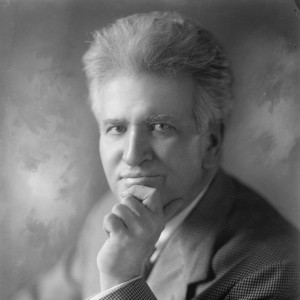 Robert Marion La Follette
 Adolf Hitler
 Huey P. Long
 Franklin Delano Roosevelt