



 Français; Conde Spencer
 Español; Conde Spencer
 Português; Conte Spencer
 Italiano; Earl Spencer
 Deutsch
 → Personalities → Earl of Spencer


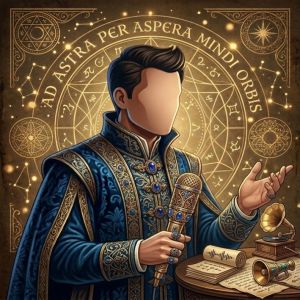
Charles Spencer, the 9th Earl Spencer, is best known for delivering the powerful eulogy at the funeral of his sister, Diana, Princess of Wales, in 1997. His speech honoured Diana's humanitarian legacy while challenging the treatment she received from the media and the constraints of royal tradition, becoming a landmark example of public speaking and influencing how her life and death were remembered.
Born in London in 1964, he was educated at Eton College and the University of Oxford, where he studied modern history. He worked as a television journalist and correspondent for NBC News before becoming an established historian and author, writing books about British history, military conflicts and his family's heritage. In 1992, he inherited the Spencer earldom and Althorp, the family's historic estate in Northamptonshire. He has also presented historical television programmes and written memoirs reflecting on his childhood and personal experiences.
A curious family tradition at Althorp is that the children have been known to slide down the grand staircase on breakfast trays. The 9th Earl Spencer revealed that he had done it himself, as had his father, making this playful activity an amusing tradition passed down through generations of an aristocratic family.
In his memoir A Very Private School, published in 2024, he revealed that he had suffered physical and sexual abuse at boarding school from a young age. He described how these experiences affected him into adulthood and how difficult it was to confront and share those memories publicly.
His most significant contribution to public life was his role in preserving the legacy of Diana, Princess of Wales, and challenging the treatment she received from the media and royal institutions. At her 1997 funeral, he delivered a memorable eulogy criticising press intrusion, defending Diana’s humanity beyond her royal title, and promising to help protect her sons, Princes William and Harry, from excessive institutional pressures. He has also written books about her life and continued to preserve the Spencer family's historical heritage at Althorp.
He is known for his emotional, persuasive and carefully crafted language, combining vivid imagery, memorable contrasts and a strong sense of moral purpose. His famous eulogy for Diana, Princess of Wales, demonstrated his ability to connect personal grief with wider social concerns, while his historical writing reflects a talent for narrative storytelling and bringing the past to life.
His most renowned speech is the 1997 eulogy for Diana, Princess of Wales, delivered at Westminster Abbey, which became widely recognised for its emotional power and criticism of press intrusion. Among his most notable books are Althorp: The Story of an English House (1998), Blenheim: Battle for Europe (2004), Killers of the King (2014), and To Catch a King (2017), which explore British family heritage and dramatic historical events.
His later works include A Very Private School (2024), a memoir about his boarding-school experiences, and Swan Song: Diana, My Sister (2026), a personal account of his relationship with Diana and her life. His writing is known for narrative storytelling, vivid descriptions and candid personal recollections.
Through his historical writing and public speaking, he has contributed to humanity by preserving historical heritage, encouraging reflection on the past, and highlighting the importance of compassion, privacy, and human dignity. His eulogy for Diana, Princess of Wales, challenged media intrusion and emphasised the value of seeing public figures as human beings beyond their titles, while his books have helped bring important historical events and personal experiences to wider audiences.
His works teach us the importance of structuring a message clearly, using vivid details to make ideas memorable, and adapting language to the audience and occasion. His historical writing demonstrates how research and storytelling can bring complex events to life, while his speeches show how carefully chosen words, contrasts, and a well-timed conclusion can strengthen an argument and hold an audience’s attention.
Studying his work can help individuals improve their writing and public speaking, develop critical thinking, and understand how words can influence opinions, preserve memories, and inspire positive change.

 https://en.wikipedia.org/wiki/Charles_Spencer,_9th_Earl_Spencer

 Ronald Reagan